Rail welding is a critical part of building and maintaining safe, reliable railway infrastructure. While a completed weld may represent only a small section of track, its quality can influence track integrity, ride performance, maintenance requirements and the long-term reliability of the rail asset.
For infrastructure owners and project teams, rail welding is therefore much more than joining two lengths of steel. It is a specialised process where preparation, technical skill, quality control and precision all matter.
Whether undertaken during track renewal, maintenance or new rail construction, correctly executed rail welding helps create a continuous and dependable running surface capable of performing under repeated dynamic loads.
Why Rail Welding Matters
Modern railway networks are expected to carry significant loads while maintaining strict standards for track geometry, reliability and safety.
Every rail joint forms part of that system.
Poorly executed welding can introduce defects or irregularities into the rail. Over time, these may contribute to increased dynamic loading, accelerated wear or additional maintenance requirements.
A high-quality weld, by contrast, restores continuity through the rail and supports consistent wheel-to-rail interaction.
This makes welding quality particularly important during major track renewal and maintenance programs, where the objective is not simply to replace components but to improve overall asset performance.
Precision Starts Before the Weld
A successful rail weld begins well before the welding process itself.
Rail condition, alignment and preparation must first be assessed. The work area also needs to be properly established, and the welding method must suit the rail, project requirements and applicable specifications.
This preparation helps ensure the finished joint achieves the required alignment and profile.
Importantly, experienced rail welding teams understand that seemingly small variations can affect the final result. For this reason, disciplined preparation is just as important as the welding process itself.
Common Rail Welding Methods
Different rail environments and project requirements may call for different welding techniques. Two methods commonly associated with rail construction and renewal are aluminothermic welding and wire feed welding. Flash butt welding is also a common method however Matrix does not use this technique.
Aluminothermic Welding
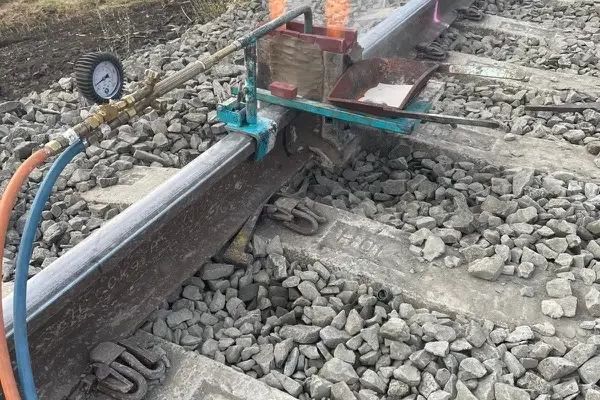
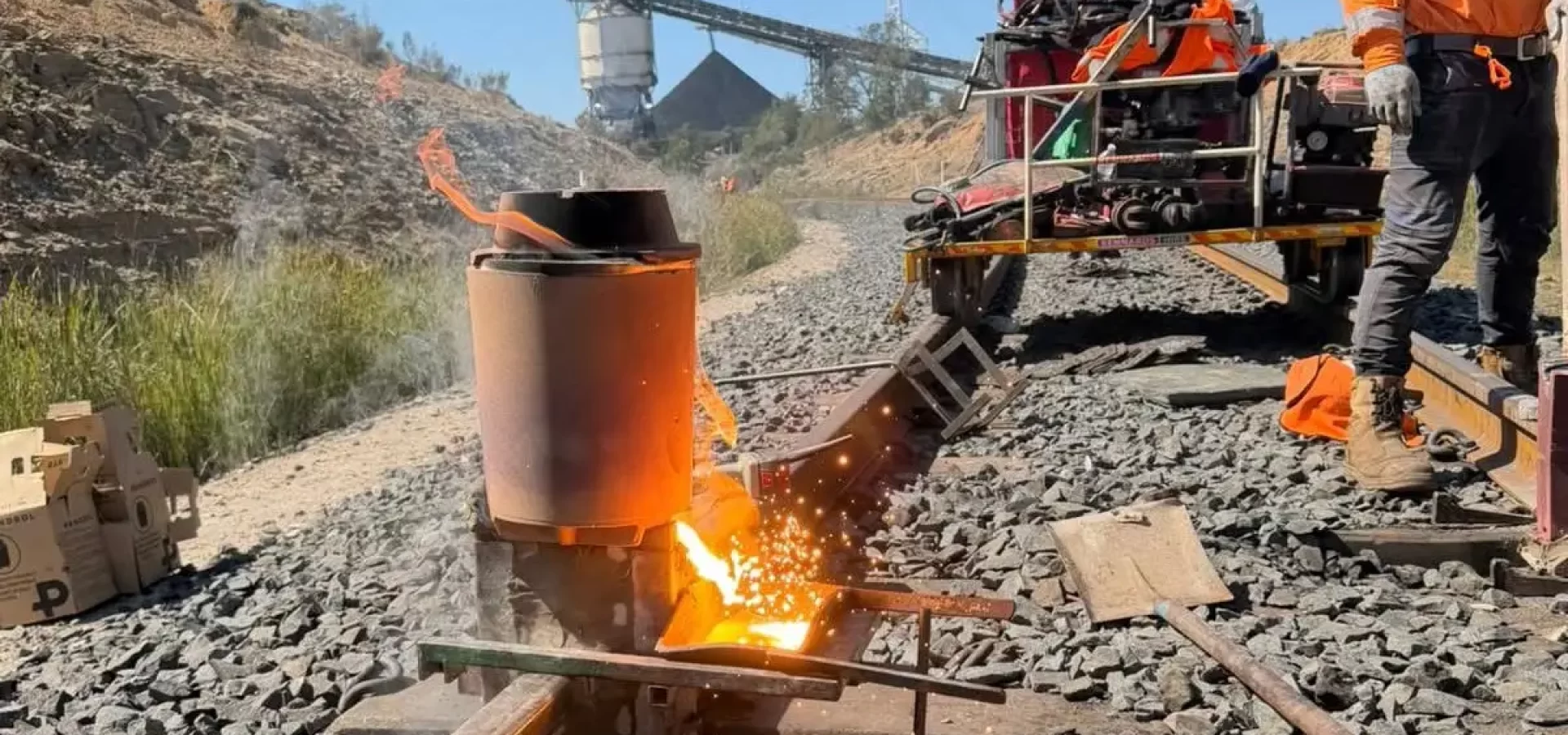
Aluminothermic welding, often referred to as thermit or thermite welding, is widely used to join rails directly in the field. This makes it well suited to track construction, renewal and maintenance works.
The process uses a controlled chemical reaction to produce molten steel, which forms the weld between prepared rail ends. Once cooled, excess material is removed and the joint is carefully finished to achieve the required rail profile.
Correct preparation, alignment and finishing are critical to achieving a high-quality result. When completed by experienced rail welding personnel, aluminothermic welding provides a strong, continuous rail joint that supports reliable long-term track performance.
Wire Feed Welding
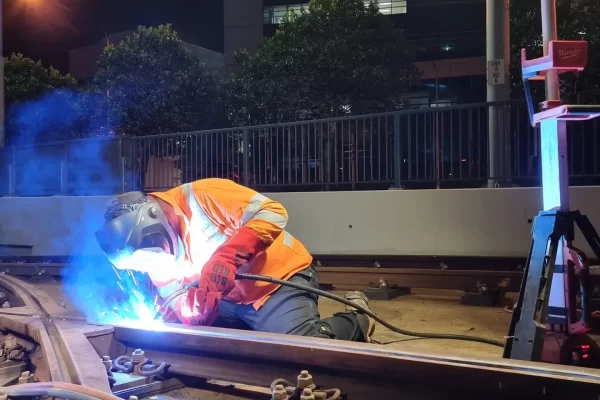
Wire feed welding is used in rail maintenance and repair where controlled material deposition and precision are important. Welding wire is continuously fed into the weld area, allowing worn or damaged rail sections to be carefully repaired or built up. The process can be particularly useful for rail head repairs and localised wear, subject to approved procedures and network requirements.
Successful wire feed welding relies on correct preparation, controlled welding parameters and experienced personnel. Once completed, the repaired area is carefully finished to achieve the required rail profile and support consistent wheel-to-rail interaction.
When performed correctly, wire feed welding can help restore rail condition, extend asset life and reduce unnecessary replacement.
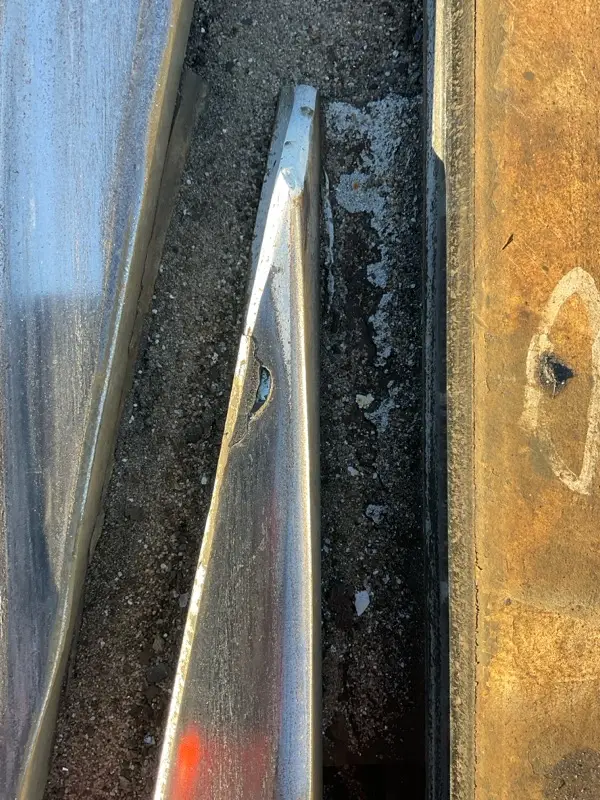
Why the Finished Rail Profile Is So Important
Completing the weld does not complete the job.
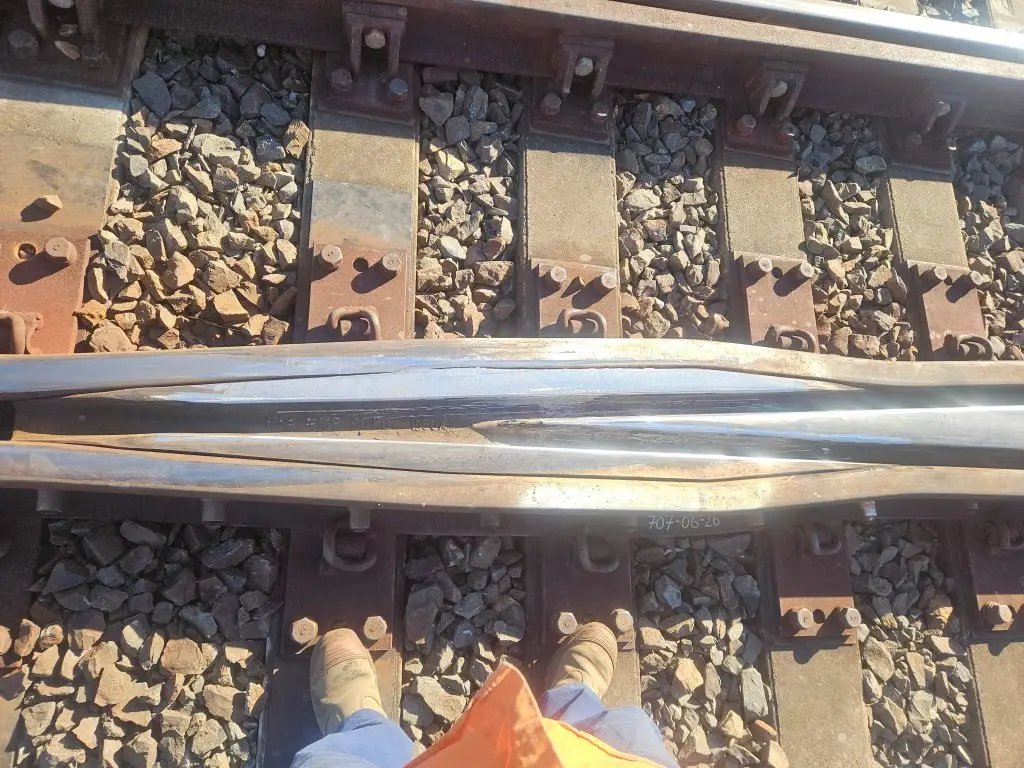
The finished rail surface must provide a smooth transition through the welded joint. Therefore, grinding and finishing are important stages of the rail welding process.
The objective is to achieve the required rail profile while removing unwanted irregularities around the weld.
A properly finished weld supports:
Smooth wheel transition → Reduced impact loading → Improved track performance → Lower unnecessary wear
This is where precision becomes particularly important. Even relatively small inconsistencies at the wheel-to-rail interface can affect how loads transfer through the track structure.
Quality Control Cannot Be an Afterthought
Rail welding takes place within a highly controlled infrastructure environment. Accordingly, quality assurance must be incorporated throughout the work rather than treated as a final inspection.
Depending on the project and network requirements, controls may include preparation checks, measurement, visual inspection, weld finishing and other specified verification processes.
Just as importantly, records and traceability may form part of the project’s quality requirements.
For asset owners and principal contractors, this disciplined approach provides confidence that welding activities have been completed in accordance with the applicable project and network requirements.
Rail Welding During Track Renewal
Rail welding becomes particularly important during track renewal.
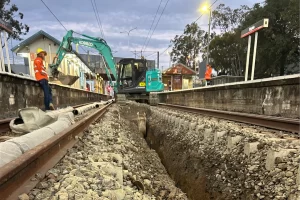
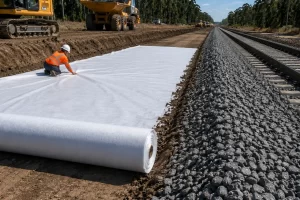
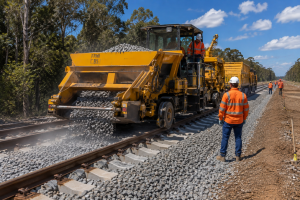
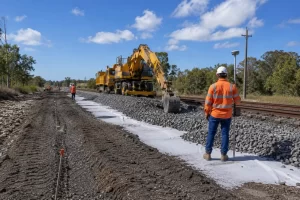
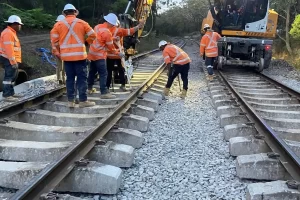
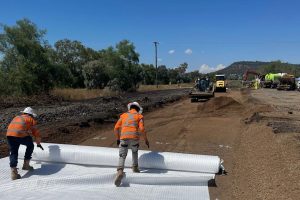
Renewal projects may involve replacing rail, sleepers, ballast and, where required, rehabilitating the underlying formation. Once new rail is installed, welding helps create the continuous track structure required for reliable operation.
However, the different elements should not be viewed in isolation.
New rail cannot compensate for an unstable formation. Likewise, quality ballast and sleepers cannot overcome problems created by poorly executed rail joints.
Effective track renewal considers the complete track structure as one interconnected asset.
That includes:
Rail → Welds → Sleepers → Fastenings → Ballast → Formation → Drainage
This whole-of-track approach helps infrastructure owners achieve greater value from renewal expenditure and reduce the likelihood of recurring maintenance problems.
Planning Rail Welding Within Possession Windows
One of the practical challenges of railway construction is completing specialist activities within limited access periods.
Rail welding may need to integrate with rail removal, sleeper replacement, ballast works, tamping, stressing, inspection and other construction activities.
Therefore, sequencing is critical.
Experienced project teams plan welding activities around the wider construction program so each stage can proceed efficiently. Materials, equipment and qualified personnel must also be available when required.
When possession time is limited, delays in one activity can affect several others.
Good planning consequently contributes not only to welding quality, but also to successful possession delivery.
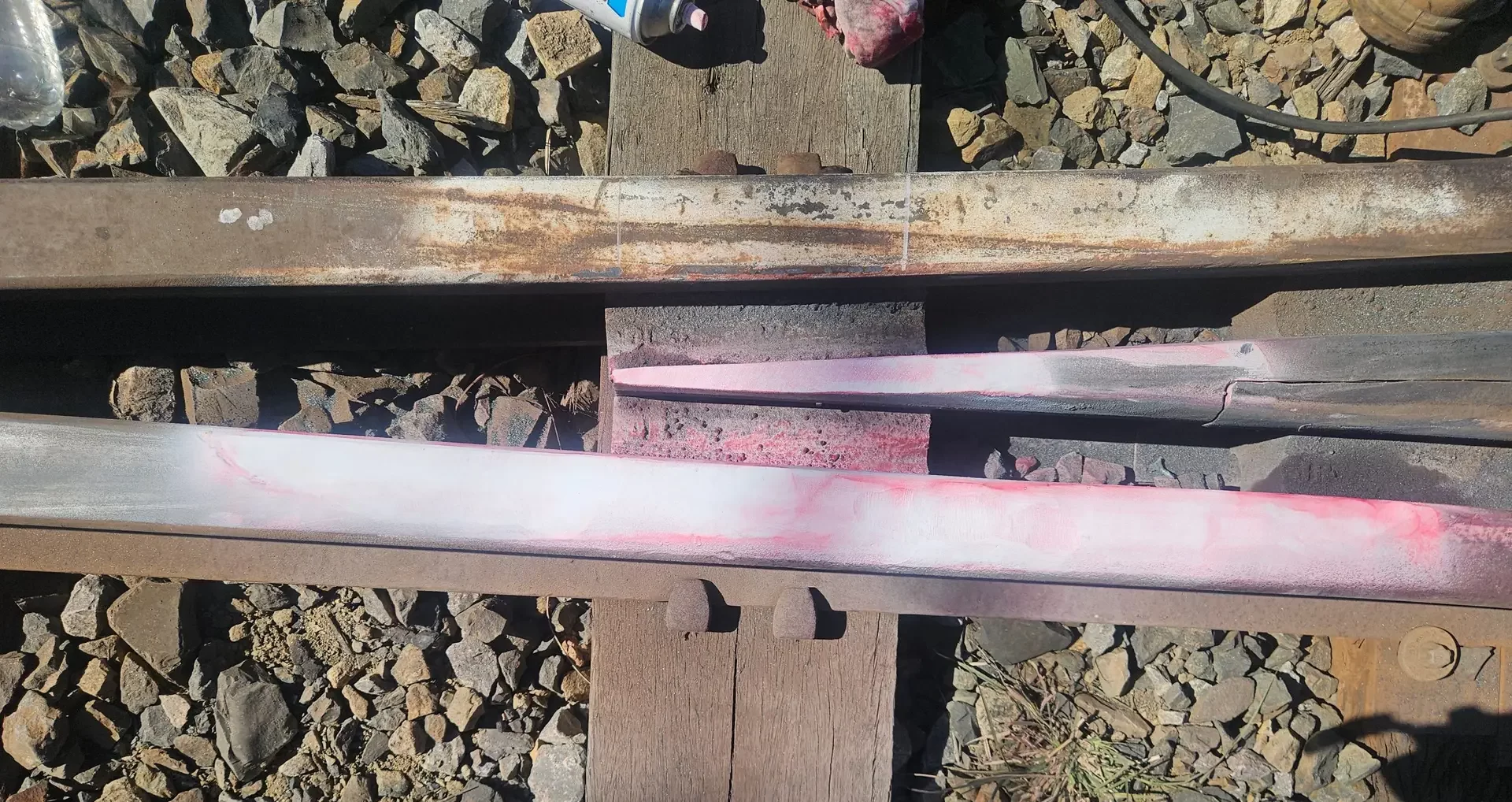
Skilled People Remain Critical
Specialist equipment and proven processes are essential. However, experienced people remain one of the most important elements of successful rail welding.
Rail welders need to understand more than the welding process itself. They must also operate effectively within demanding rail environments where safety, quality, timing and communication are closely connected.
This becomes particularly important during shutdowns and possessions, where multiple work groups may be operating within a tightly controlled program.
For infrastructure owners and principal contractors, engaging capable rail welding specialists can therefore reduce project risk while supporting consistent quality and efficient delivery.
Safety, Quality and Precision Work Together
Rail welding combines technical work with the safety requirements of an operational railway environment.
As a result, successful delivery depends on several factors working together:
- Qualified and competent personnel
- Appropriate welding procedures
- Careful rail preparation
- Correct equipment
- Effective worksite controls
- Quality inspection and verification
- Clear communication
- Coordination with surrounding rail activities
None of these elements should operate independently.
Precision is ultimately the result of good people following good processes within a well-managed project.
Why Precision Matters Over the Life of the Asset
The true value of quality rail welding is not measured only when the possession is handed back.
It is measured over the operating life of the track.
A well-executed weld contributes to a consistent running surface and dependable rail performance. In turn, this supports the broader objectives of rail asset management: reliability, maintainability and long-term value.
For infrastructure owners managing large networks, small improvements repeated across hundreds or thousands of welds can become significant.
This is why welding quality should be considered part of long-term asset performance rather than simply a construction requirement.
Rail Welding Expertise from Matrix Unlimited
Matrix Unlimited provides specialist rail welding services as part of our broader rail construction, maintenance and track renewal capability.
Our teams understand the importance of preparation, precision, quality and coordination when delivering works within demanding rail environments.
Whether supporting planned maintenance, track renewal, shutdown works or larger infrastructure programs, we work collaboratively with clients and project teams to deliver safe, practical and reliable outcomes.
Planning Rail Welding or Track Renewal Works?
If you’re planning rail construction, maintenance or track renewal works, speak with Matrix Unlimited about the specialist rail capability required to support your project.