Railway ballast is often one of the most visible components of a rail network, yet its importance is frequently underestimated. While rail, sleepers and signalling naturally attract attention, the ballast beneath the track plays a critical role in maintaining safety, ride quality and long-term infrastructure performance.
Proper ballast installation is far more than simply placing crushed rock around sleepers. It is a carefully engineered process that distributes train loads, provides drainage, maintains track geometry and supports the entire track structure.
For infrastructure owners and delivery partners alike, quality ballast installation is fundamental to building reliable, resilient rail networks.
Why Railway Ballast Matters
Ballast forms the structural layer between the sleepers and the underlying formation. Typically manufactured from hard, durable crushed rock, railway ballast performs several important functions simultaneously.
A properly constructed ballast layer helps to:
- Distribute heavy axle loads evenly into the formation
- Maintain track alignment and geometry
- Secure sleepers in position
- Absorb vibration from passing trains
- Facilitate effective drainage
- Reduce vegetation growth
- Support efficient maintenance activities
Without a well-constructed ballast layer, even new rail and sleepers can experience premature deterioration.
Key Takeaways
- Supports track stability
- Improves drainage
- Reduces maintenance
- Extends asset life
- Critical during track renewal
Ballast Is Part of an Engineered Track System
Modern railway infrastructure should never be viewed as individual components working independently.
Instead, each layer contributes to the overall performance of the asset.
A typical track structure consists of:
- Rail
- Fastening systems
- Concrete or timber sleepers
- Ballast
- Capping layer
- Formation
- Subgrade
When every layer performs as intended, the result is a stable, durable and efficient railway capable of carrying increasing traffic volumes while minimising maintenance requirements.
The Ballast Installation Process
Although every project differs, ballast installation generally follows a structured sequence designed to achieve consistent quality and long-term performance.
Typical activities include:
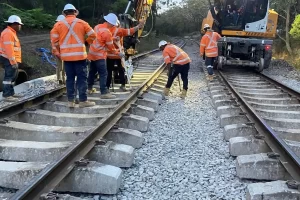
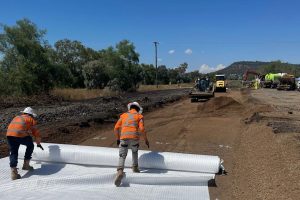
- Preparing the formation
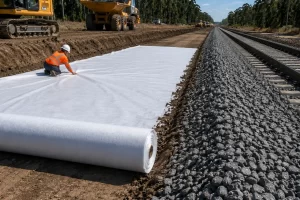
- Installing geofabric where required
- Constructing the capping layer
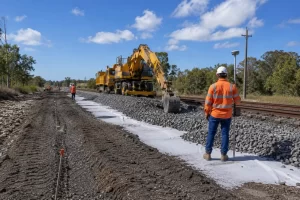
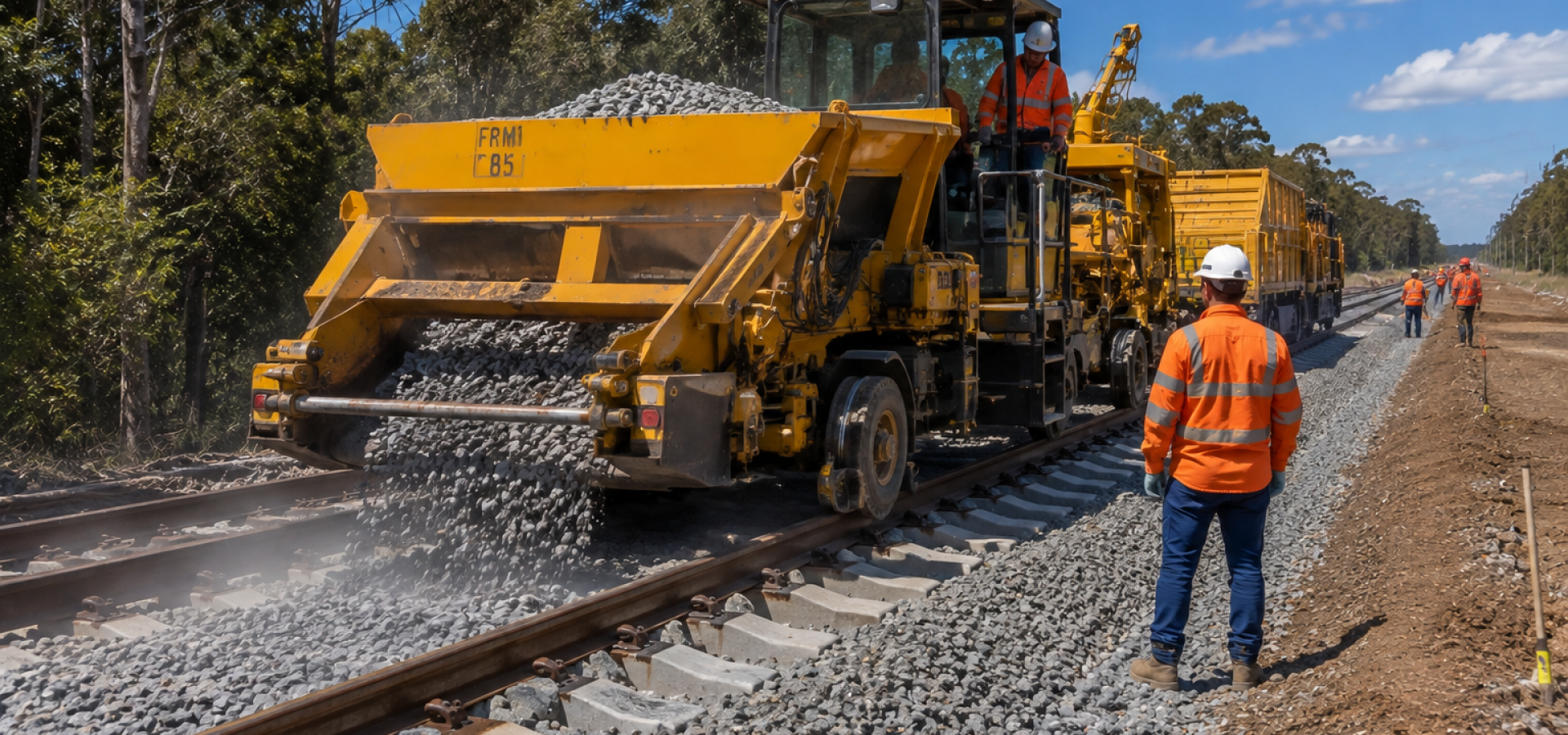
- Delivering ballast to site
- Spreading ballast evenly
- Installing sleepers and rail
- Profiling the ballast
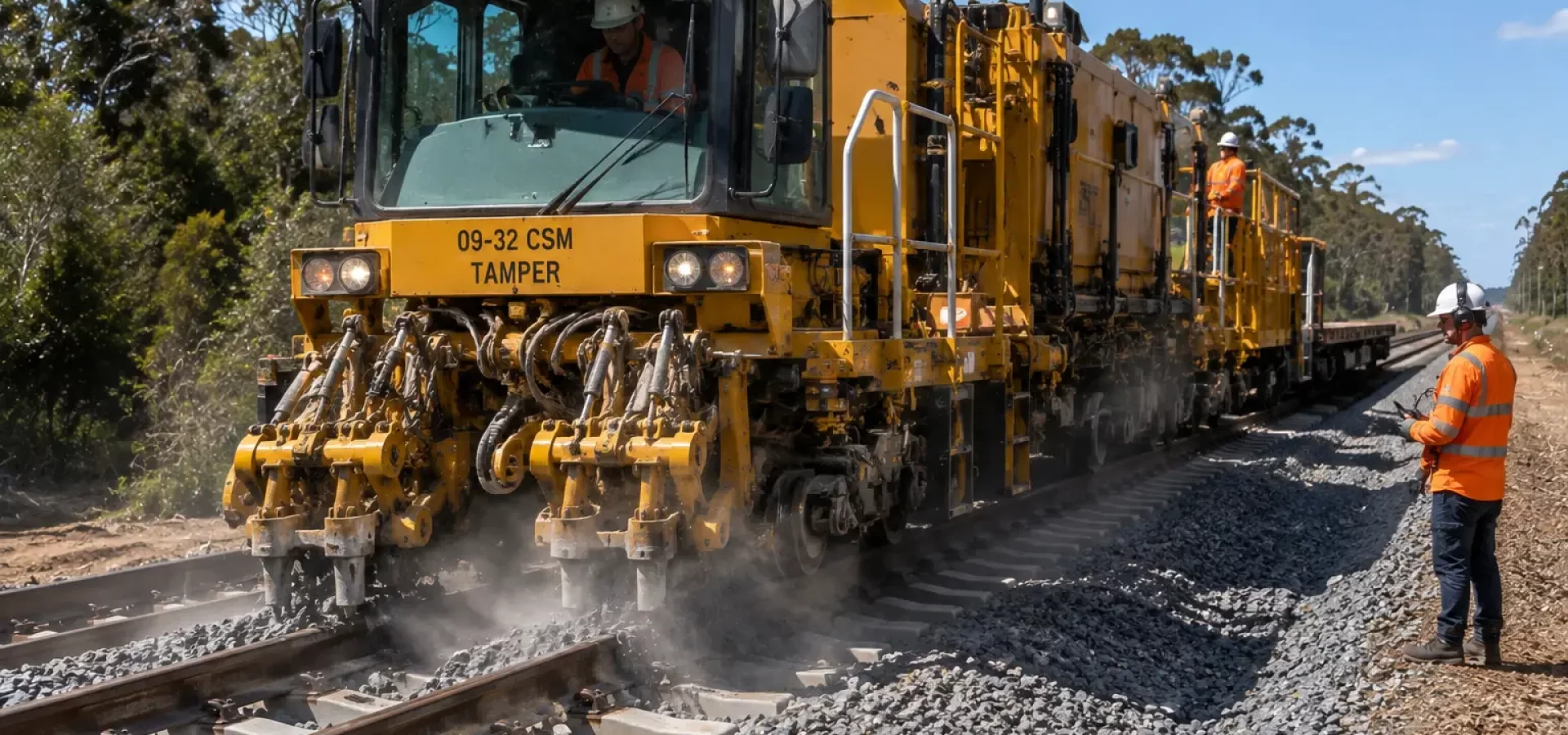
- Tamping and regulating
- Final geometry adjustments
- Quality inspections
Each stage contributes to achieving the correct ballast depth, profile and compaction necessary for reliable track performance.
Why Ballast Quality Matters
Not all aggregate is suitable for railway ballast. Unlike conventional construction aggregate, railway ballast must withstand millions of tonnes of dynamic loading while maintaining its structural integrity and drainage performance.
The selection of ballast material has a direct impact on maintenance frequency, ride quality and the long-term reliability of the track structure.
| Characteristic | Why It Matters |
|---|---|
| High strength | Resists crushing under repeated axle loads |
| Angular particle shape | Interlocks to provide track stability and resist movement |
| Durability | Maintains performance over decades of service |
| Weather resistance | Minimises degradation caused by moisture and temperature changes |
| Free-draining properties | Allows water to move away from the track structure |
| Low degradation | Reduces ballast fouling and extends maintenance intervals |
Selecting high-quality ballast is one of the simplest ways to reduce whole-of-life maintenance costs while improving network reliability.
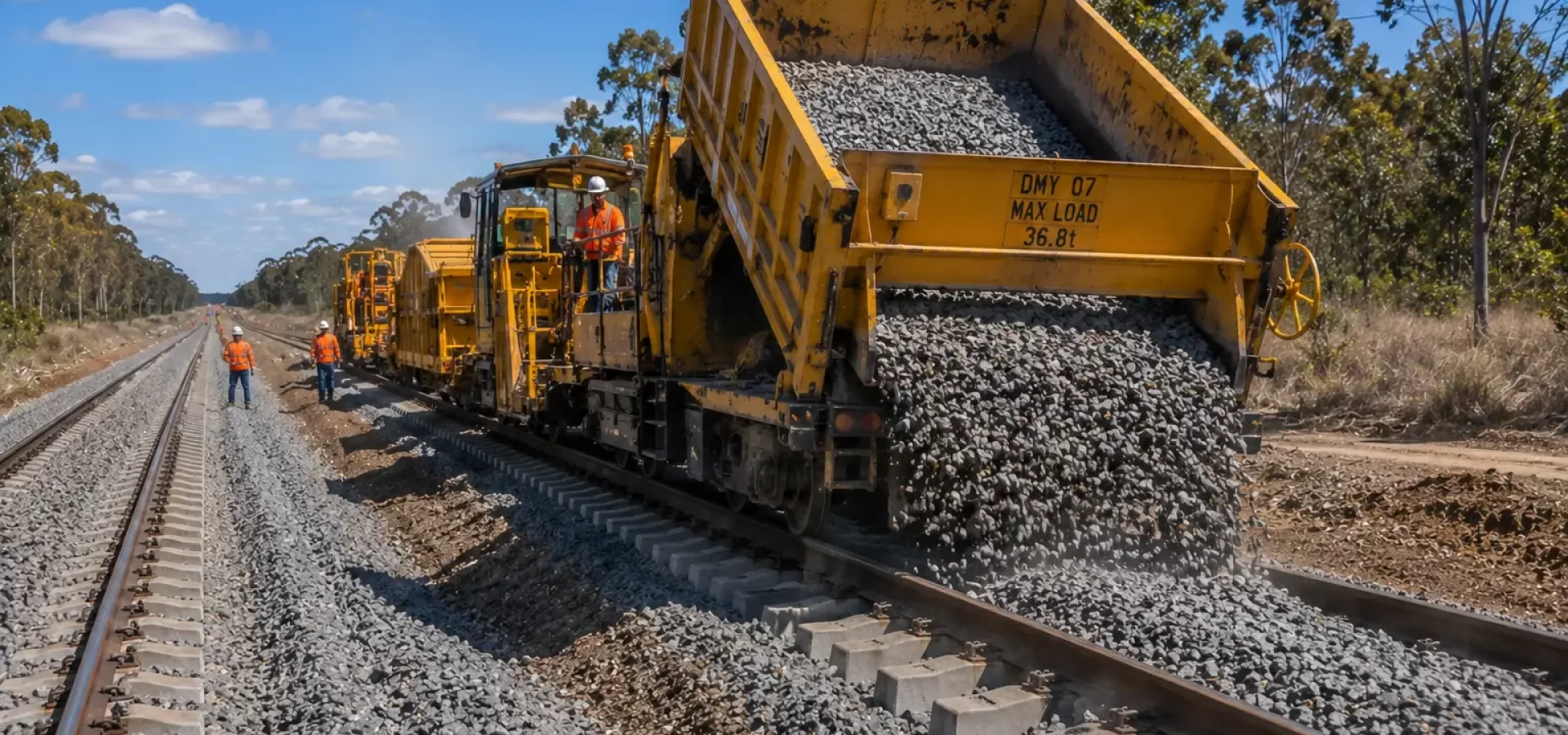
Ballast Profiling Supports Long-Term Performance
Once ballast has been installed, it must be carefully shaped into the correct profile around the sleepers. The ballast shoulder is far more than a neat finish—it plays a critical role in resisting track movement and directing water away from the formation.
Did You Know? A poorly maintained ballast profile can significantly increase the likelihood of water retention, track settlement and recurring geometry defects, even when the rail and sleepers remain in good condition.
A correctly profiled ballast shoulder provides:
- Improved drainage away from the formation
- Greater lateral stability for sleepers
- Reduced ballast movement under load
- Easier access for maintenance activities
- Better resistance to long-term settlement
Correct ballast profiling protects the investment made during track renewal and contributes to longer maintenance intervals.
Tamping Restores Track Geometry
Following ballast installation, the track must be returned to its designed geometry before it can safely carry traffic. This is achieved through tamping—a precision process carried out using specialist rail machinery.
The typical process includes:
- Measuring existing track geometry.
- Lifting and aligning the track to design levels.
- Compacting ballast beneath each sleeper.
- Regulating the ballast profile.
- Verifying geometry against specification.
When completed correctly, tamping delivers:
- Improved ride quality
- Correct vertical and horizontal alignment
- Consistent load distribution
- Reduced future maintenance requirements
Rather than viewing tamping as a separate activity, it should be considered the final stage of achieving a stable and resilient ballast structure.
Drainage and Ballast Work Together
Ballast performs another critical function that is often overlooked – it allows water to drain freely through the track structure.
Without effective drainage, moisture becomes trapped within the ballast and formation, accelerating deterioration throughout the asset.
What happens when drainage fails?
Poor Drainage. Ballast becomes contaminated. Water remains within the track structure. Formation weakens. Track geometry deteriorates. Maintenance frequency increases.
For this reason, successful renewal projects often combine ballast replacement with drainage upgrades and formation rehabilitation, addressing the underlying causes rather than simply treating the symptoms.
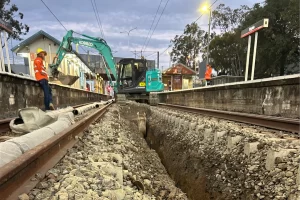
Ballast Installation During Track Renewal
Ballast installation is a key stage of most track renewal projects.
Replacing worn ballast while renewing rail, sleepers and formation ensures every layer of the track structure works together to achieve long-term performance.
An integrated approach provides benefits including:
- Improved reliability
- Reduced maintenance intervention
- Longer asset life
- Better ride quality
- Increased network resilience
This whole-of-asset approach is increasingly adopted by rail infrastructure owners seeking greater value from renewal investments.
Safety and Planning Drive Successful Delivery
Ballast installation often occurs within live railway environments where possession windows, safety requirements and operational constraints must be carefully managed.
Successful delivery relies upon:
- Detailed work planning
- Experienced personnel
- Appropriate plant
- Material logistics
- Quality assurance
- Environmental management
- Effective communication
Well-planned projects reduce operational disruption while delivering better outcomes for infrastructure owners.
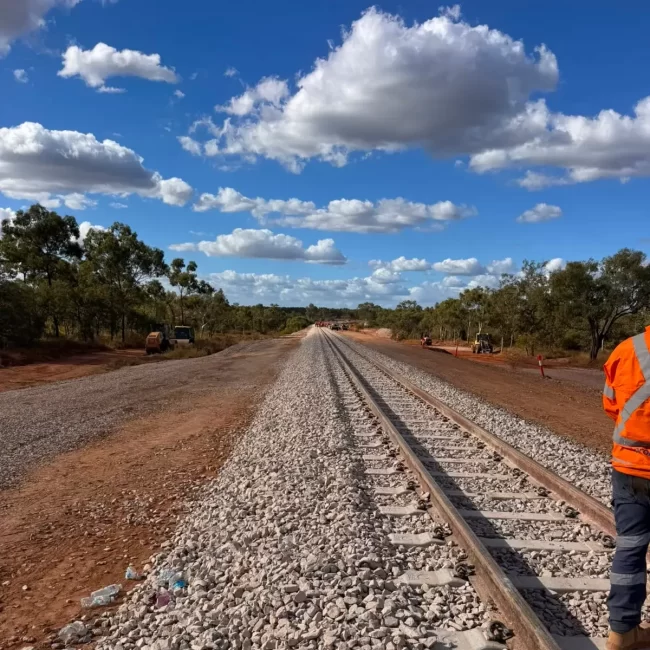
Matrix’s Approach to Ballast Installation
At Matrix Unlimited, we understand that quality ballast installation is fundamental to the long-term performance of every railway asset.
Our teams combine rail and civil construction expertise to deliver integrated solutions supporting track renewals, formation rehabilitation and infrastructure maintenance programs across Australia.
By carefully coordinating ballast installation with drainage improvements, formation rehabilitation and track construction activities, we help clients maximise asset performance while reducing future maintenance requirements.
Our practical, safety-focused approach ensures projects are delivered efficiently, professionally and to the high standards expected across Australia’s rail industry.
Conclusion
Ballast installation is far more than placing crushed rock beneath railway sleepers.
It is a critical engineering activity that supports load distribution, drainage, track geometry and long-term infrastructure reliability.
When combined with quality formation rehabilitation, effective drainage and disciplined construction practices, properly installed ballast forms the foundation of a resilient railway capable of supporting safe and efficient operations for decades.
For infrastructure owners seeking long-term value, investing in quality ballast installation remains one of the smartest decisions within any rail renewal program.
Need Specialist Rail Infrastructure Support?
Whether you’re planning a major track renewal, formation rehabilitation program or targeted maintenance works, Matrix Unlimited delivers experienced rail and civil construction solutions across Australia.
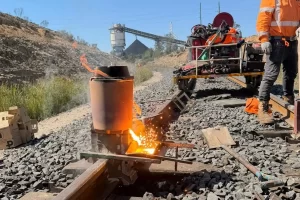
Our teams provide specialist expertise in track renewals, ballast installation, drainage, rail welding, labour and plant to help clients deliver safe, reliable and efficient infrastructure outcomes.
Contact Matrix Unlimited today to discuss your next rail infrastructure project.