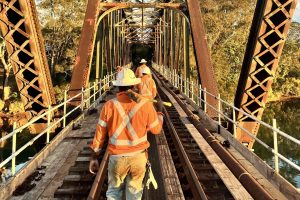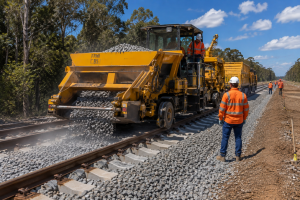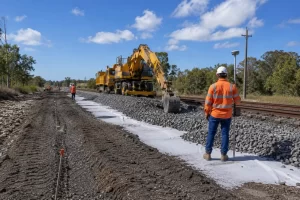
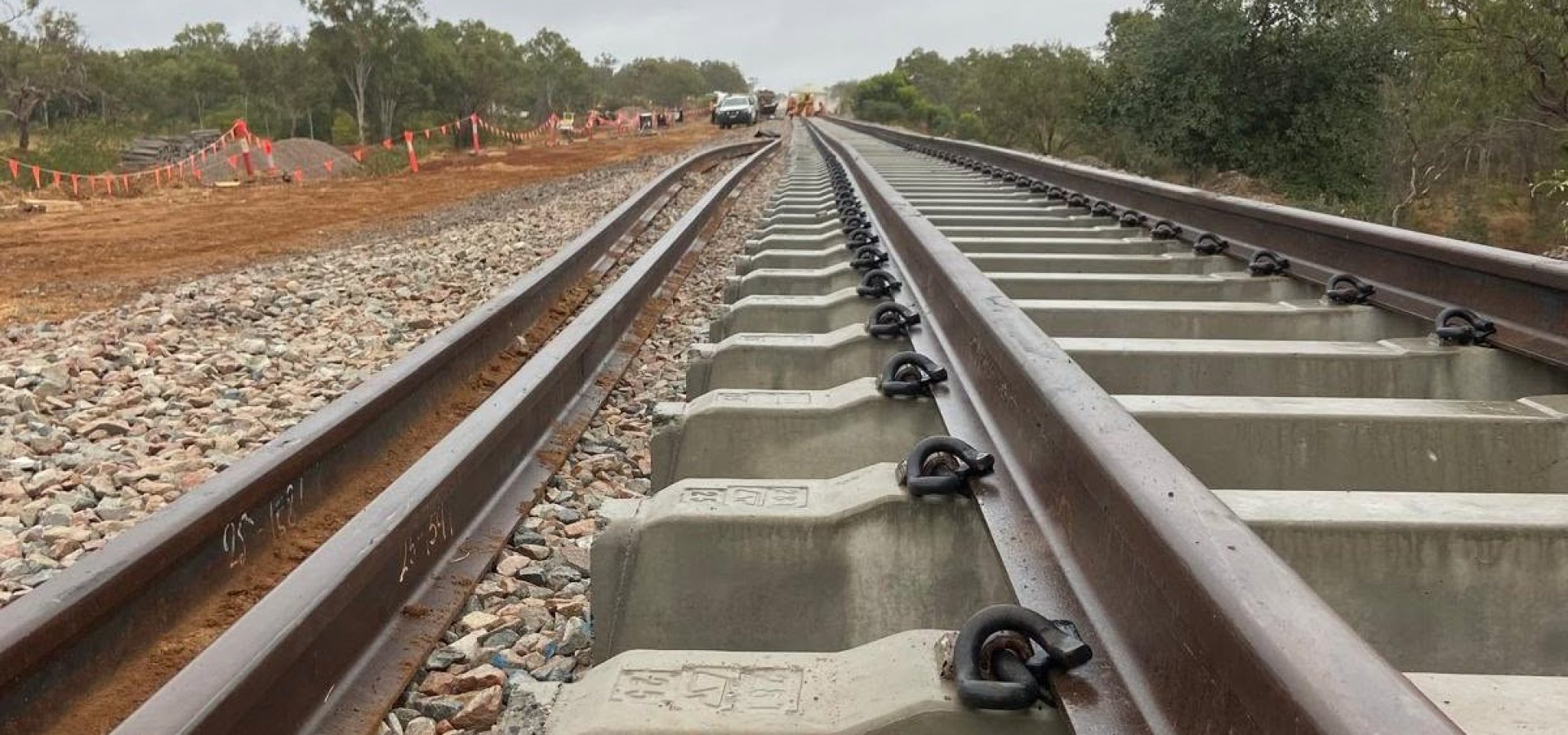
Railway sleepers form the transverse support system beneath the rails, helping maintain track gauge, distribute wheel loads and hold the track in position. Although they may appear simple, their material, fastening system, spacing, condition and support all influence how the track performs.
This guide explains the main sleeper types used across Australian rail networks, how project teams plan and deliver sleeper works, and why ballast, drainage, safety controls and quality records matter. It provides general industry information only; the relevant rail infrastructure manager’s approved design, standards and project documentation always govern the work.
Why railway sleepers matter
Sleepers connect the rail, fastening system and ballast into a working track structure. They spread loads into the ballast, restrain lateral and longitudinal movement, and support the specified track gauge. Consequently, deteriorated sleepers or poor support conditions can affect geometry, fastening performance and the track’s ability to carry operational loads.
Sleeper performance also depends on the components around it. For example, sound sleepers cannot compensate for fouled ballast, inadequate drainage or a weak formation. Likewise, correct sleeper installation will not overcome an incompatible fastening arrangement. Asset owners therefore assess the complete track system rather than treating each sleeper as an isolated component.
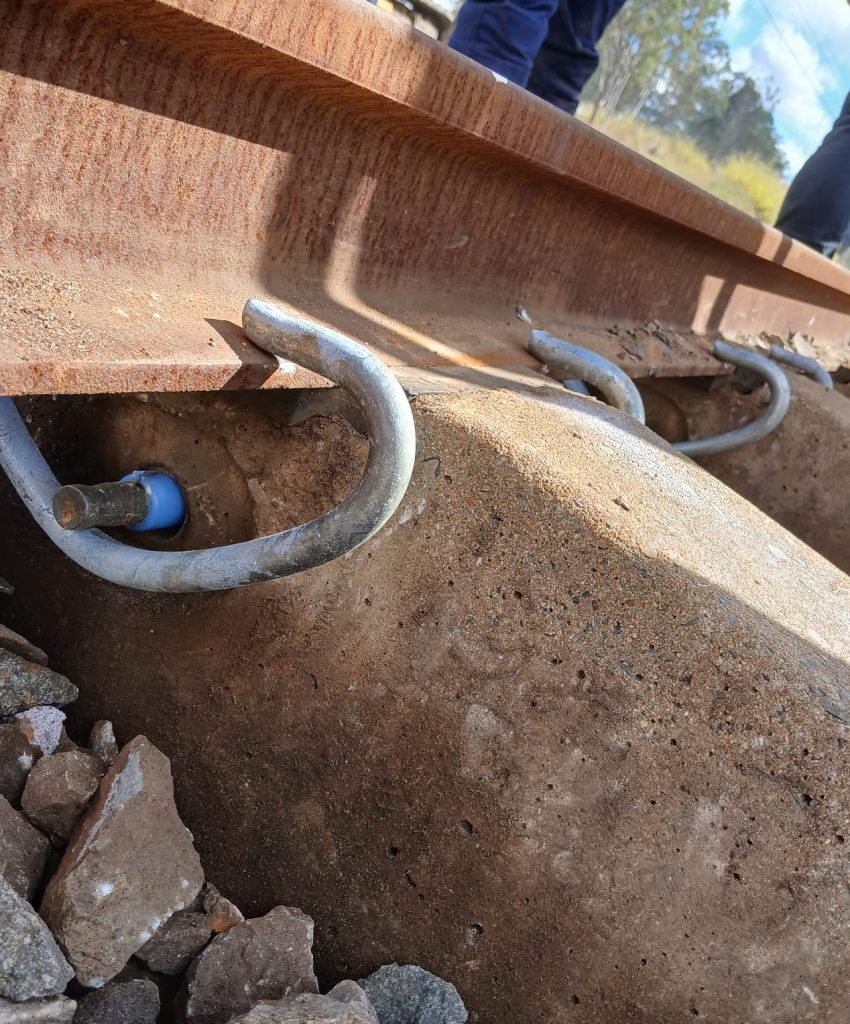
Common types of railway sleepers
Timber sleepers
Timber sleepers remain present in many existing networks, turnouts, bridges and specialised locations. They are comparatively easy to bore, plate and handle, which can assist maintenance teams in some applications. Nevertheless, timber condition can deteriorate through decay, splitting, mechanical wear or fastening-hole damage.
Species, treatment, dimensions, grading and fastening patterns must match the applicable specification. In addition, project teams need to manage treated timber, removed sleepers and disposal routes under the environmental controls for the site.
Steel sleepers
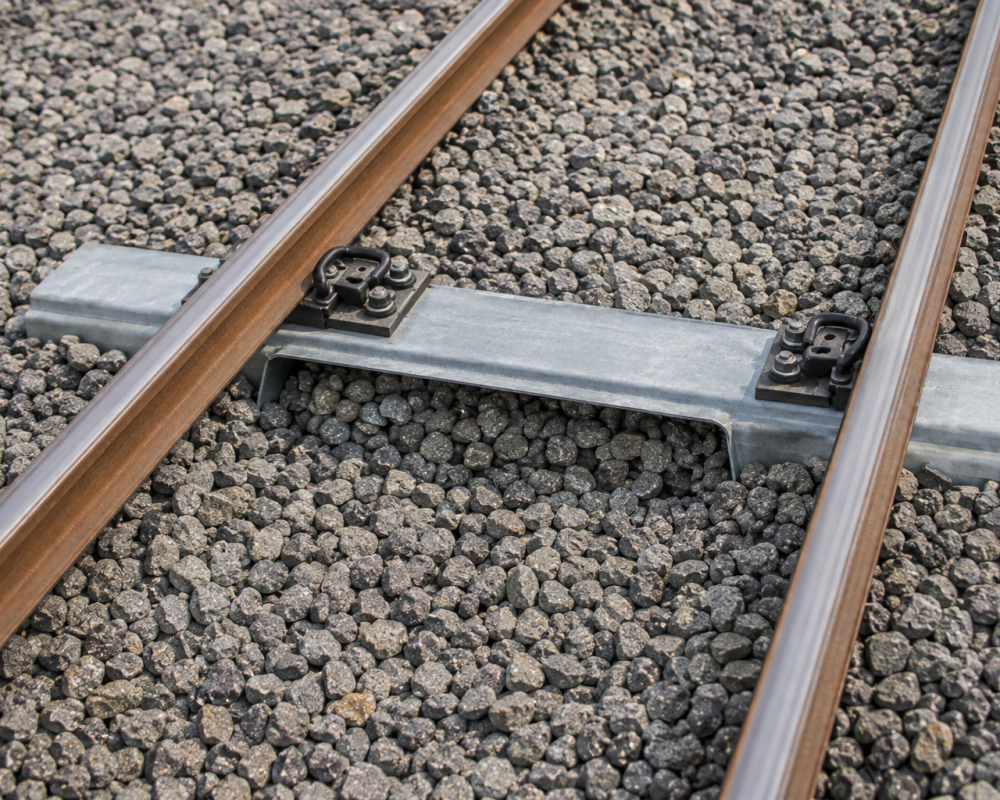
Steel sleepers are lighter than concrete units and may suit defined renewal or replacement applications. Their performance relies heavily on correct ballast placement and compaction within and around the sleeper profile. Transport for NSW guidance, for example, notes that ballast in the steel sleeper “pod” contributes to its effective mass.
Where track circuits operate, teams must also follow the approved electrical insulation requirements. The relevant network standard determines whether steel sleepers may be installed continuously, interspersed or as isolated replacements.
Composite sleepers and special-purpose bearers
Composite sleepers can offer resistance to moisture, biological degradation and some chemical environments. However, approval is product- and location-specific. Teams must not assume that one approved composite product can replace timber, steel or concrete across every network.
Turnouts, crossings and bridges may use bearers or transoms rather than standard plain-line sleepers. These components have different dimensions, load paths and fastening layouts; therefore, they require the applicable approved drawings and installation procedures.
How sleeper selection is determined
The rail infrastructure manager and its designers determine the appropriate sleeper and fastening system. Their assessment may consider axle load, speed, annual tonnage, track gauge, rail section, curvature, signalling interfaces, environmental exposure, maintenance strategy and whole-of-life performance.
Project teams should confirm the approved configuration before procurement or mobilisation. Key checks commonly include:
- Confirm the sleeper type, dimensions, spacing and approved manufacturer or product.
- Check compatibility with the rail section, pads, clips, plates, insulators and other fastenings.
- Review transition requirements where sleeper types or track forms change.
- Verify handling, storage, lifting and disposal requirements.
- Confirm inspection hold points, testing needs and acceptance tolerances in the inspection and test plan.
These controls reduce the risk of incompatible materials arriving on site or crews installing a configuration that differs from the approved design.
Planning railway sleeper replacement and renewal works
Good planning begins with a verified scope and reliable site information. Before work starts, the delivery team reviews drawings, specifications, survey or track-condition data, access constraints, services, signalling assets, environmental requirements and rail safety arrangements.
The work method must also reflect the available possession or shutdown window. Therefore, planners sequence labour, plant, sleeper distribution, rail handling, ballast activities, welding interfaces and track restoration around the approved program. Contingency planning matters because access delays, hidden formation defects or damaged fastenings can quickly consume a short occupation.
Material logistics deserve particular attention. Teams should place sleepers close enough to the workface for efficient installation while maintaining safe clearances and protecting existing assets. Meanwhile, removed materials need a defined inspection, segregation and disposal pathway.
Typical railway sleeper installation process
The exact method varies between plain-line spot replacement, face renewal, turnout works and mechanised resleepering. However, the following sequence shows the principal controls for a conventional renewal activity.
1. Confirm authority, access and worksite protection
The project team verifies the approved work pack, possession limits, protection arrangements, permits, pre-start requirements and responsibilities. It also confirms service locations, exclusion zones and communication protocols before disturbing the track.
2. Inspect and mark the work area
Competent personnel identify the sleepers within scope and check adjacent track components. Where required, they record pre-work geometry, rail stress information and nearby asset conditions in accordance with project documentation.
3. Remove fastenings and affected sleepers
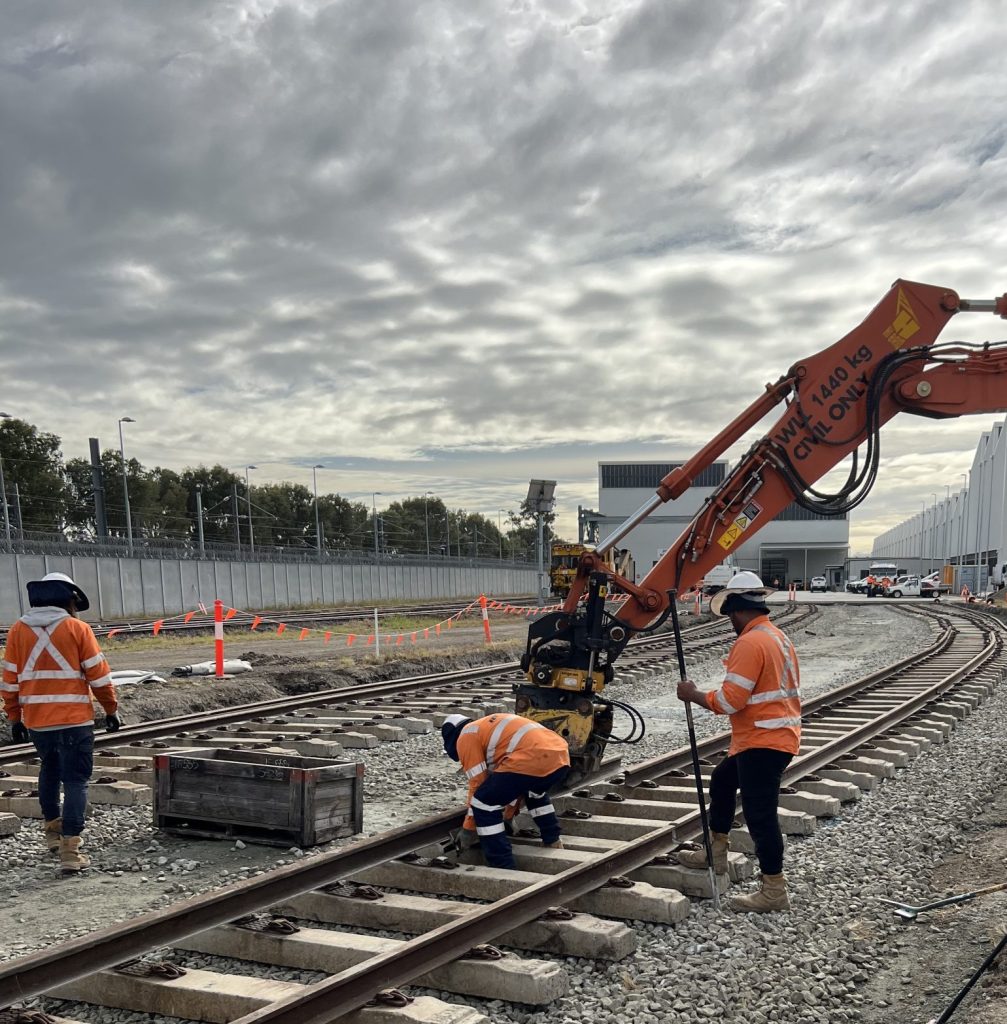
The crew removes clips, spikes, screws, plates or other components using the approved equipment and method. It then extracts sleepers while protecting the rail, signalling equipment and surrounding formation. During this stage, the team controls suspended loads, pinch points and moving plant.
4. Prepare the sleeper bed
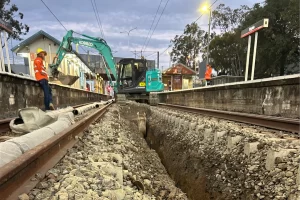
Workers clear and regulate ballast so the replacement sleeper can sit at the required location and level. If they uncover mud pumping, fouled ballast, drainage failure or formation damage, they escalate the condition rather than conceal it beneath new work.
Safety and environmental controls
Railway sleeper works combine operational rail risk with heavy materials, mobile plant and repetitive manual tasks. Accordingly, the principal contractor and rail infrastructure manager establish the worksite protection and interface requirements, while each delivery party manages the risks within its assigned scope.
Controls may address train movements, isolation boundaries, fatigue, lifting operations, pinch points, noise, dust, silica exposure, manual handling, lighting and plant–people separation.
5. Install sleepers and fastenings
The team positions each sleeper, fits the specified pads and fastening components, and secures the rail using the approved tools and settings. In addition, it maintains the required spacing, squareness and alignment under the applicable drawings and standards.
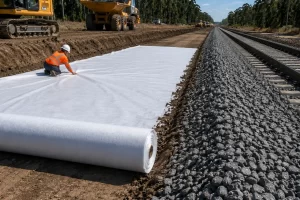
6. Restore ballast and track geometry
Plant and track crews place and compact ballast beneath and around the sleepers. Tamping and regulating then restore the designed track alignment and ballast profile where included in the work scope. Queensland Rail describes tamping as compacting ballast under and around sleepers while correcting track alignment.
7. Inspect, test and release the work
Authorised personnel complete the required geometry checks, fastening inspections, records and certifications. Finally, the responsible rail authority releases the track under its network rules and any applicable temporary operating conditions.
Teams also need clear arrangements for emergency access and communication, particularly during night possessions or in remote areas.
Environmental planning should cover ballast and spoil handling, treated timber, spills, waste segregation, vegetation, sediment control and drainage paths. For example, crews should prevent loose material from blocking existing drains or entering waterways. The approved environmental plan and asset-owner procedures determine the specific controls.
Quality assurance and handover
Quality assurance starts before installation. The project team verifies material identification, approved product status, transport condition and storage. During delivery, it follows the inspection and test plan and captures evidence at the nominated hold and witness points.
Depending on the scope, records may include sleeper counts and locations, batch or product details, fastening checks, torque or tool records where specified, track measurements, ballast and tamping records, photographs, defect reports and as-built information. Consequently, supervisors should close out incomplete records while the work remains accessible.
The authorised party then assesses the work against the applicable acceptance criteria. Matrix Unlimited supports defined construction and maintenance activities; however, engineering acceptance, certification and permission to return track to service remain with the persons appointed under the project and network requirements.
Common sleeper-renewal challenges
Restricted access and short possessions often create the greatest program pressure. Strong staging helps, but teams also need practical contingencies for delayed access, unavailable plant or higher-than-expected deterioration.
Other common challenges include mixed sleeper types, seized fastenings, variable ballast depth, buried services, wet formation and transitions near structures or turnouts. In addition, installing isolated sleepers into an existing track may introduce stiffness or support changes. Designers and asset owners must assess these technical issues where required.
The best response is early escalation supported by accurate field information. Rather than improvising outside the approved scope, the delivery team should isolate the issue, protect the worksite and obtain direction from the responsible authority.
Matrix Unlimited’s sleeper and track-support capability
Matrix Unlimited supports railway sleeper renewal, re-sleepering and broader track maintenance through defined combinations of skilled rail labour, qualified operators, rail-specific plant, supervision and welding support. The team can work within planned possessions, shutdowns and regional delivery programs across Queensland and New South Wales.
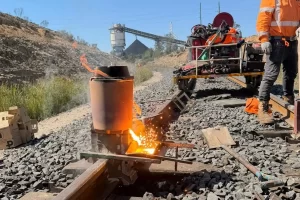
Depending on the agreed scope, Matrix can assist with material handling, sleeper removal and installation, fastening works, ballast and track-support activities, rail welding interfaces and general track construction support. Matrix works to the principal contractor’s and rail infrastructure manager’s approved documentation, while designated engineering and asset-authority personnel retain their respective approval and certification responsibilities.
Frequently asked questions
What do railway sleepers do?
Railway sleepers support the rails, maintain the specified track gauge and transfer wheel loads into the ballast and formation. They also help restrain lateral and longitudinal track movement through the fastening and support system.
Which railway sleeper material is best?
No single material suits every location. The approved choice depends on network standards, axle load, speed, track form, signalling, environment, maintenance needs and whole-of-life requirements.
How are railway sleepers replaced?
Crews establish worksite protection, remove fastenings and old sleepers, prepare the sleeper bed, install approved components, restore ballast and geometry, and complete the required inspections before authorised release.
How long do railway sleepers last?
Service life varies widely with material, traffic, environment, drainage, ballast support, fastening condition and maintenance. Asset owners use inspection data and network criteria to determine when sleepers require replacement.
A system component that deserves careful delivery
Railway sleepers perform as part of an integrated track system. Therefore, successful sleeper works require more than exchanging one component for another: teams must coordinate materials, fastenings, ballast support, drainage, worksite protection, geometry and quality evidence.
Matrix Unlimited can provide rail labour, plant, operators, supervision and specialist welding support for defined sleeper renewal and track maintenance scopes. Contact Matrix to discuss upcoming possession, shutdown or regional delivery requirements.