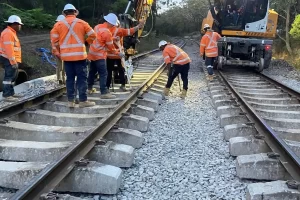
Much of what makes a railway reliable cannot be seen once construction is complete.
While rails, sleepers and ballast receive most of the attention, one of the most valuable components of modern railway construction lies hidden beneath the track—the geofabric.
Often referred to as geotextile, geofabric is used extensively throughout Australian rail infrastructure projects to improve formation stability, enhance drainage and reduce long-term maintenance requirements.
Although relatively inexpensive compared with other construction materials, it plays a significant role in protecting the investment made during track renewal and formation rehabilitation projects.
What Is Geofabric?
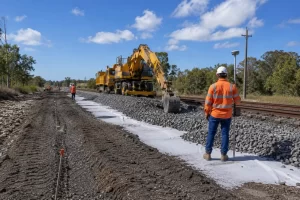
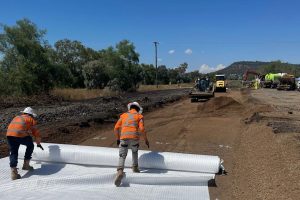
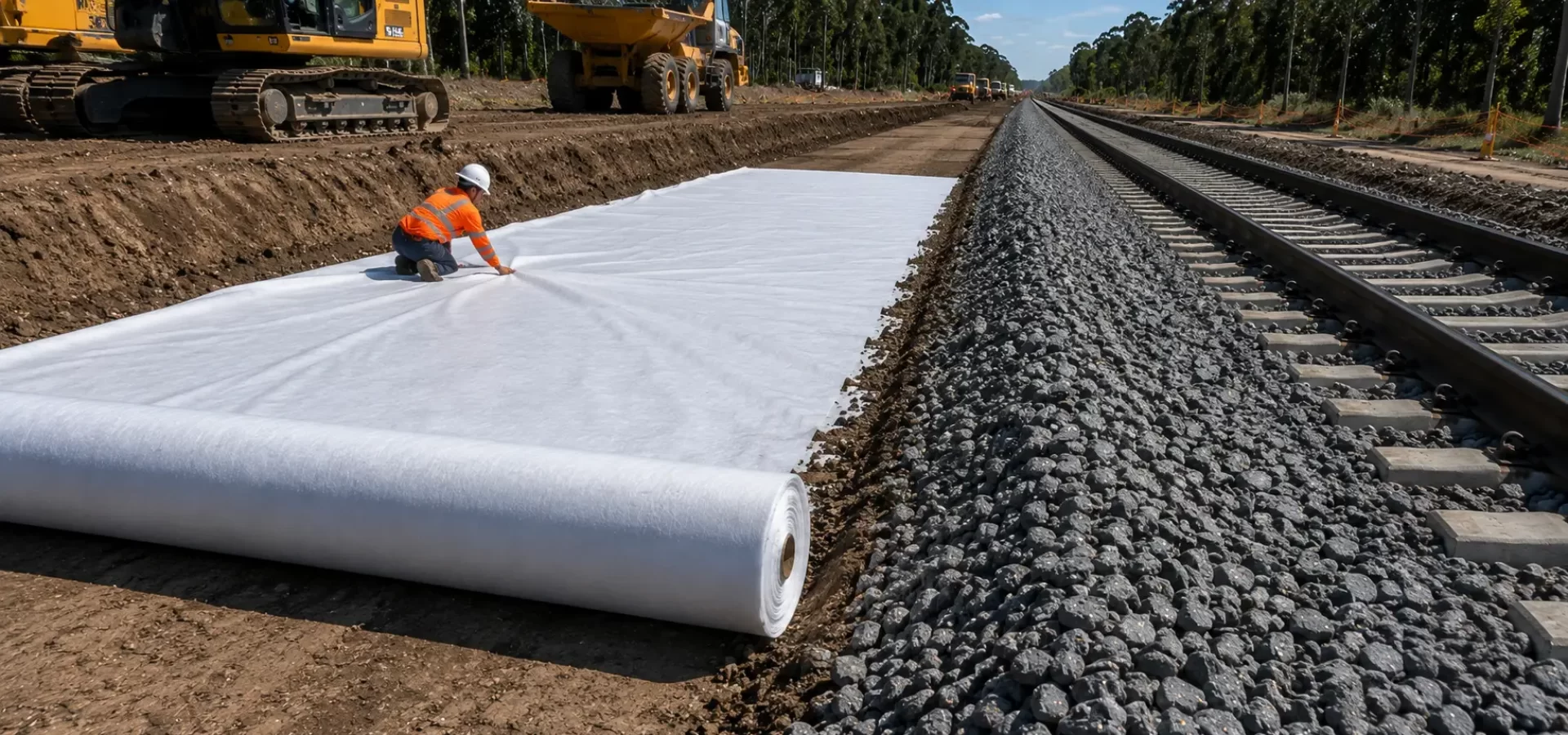
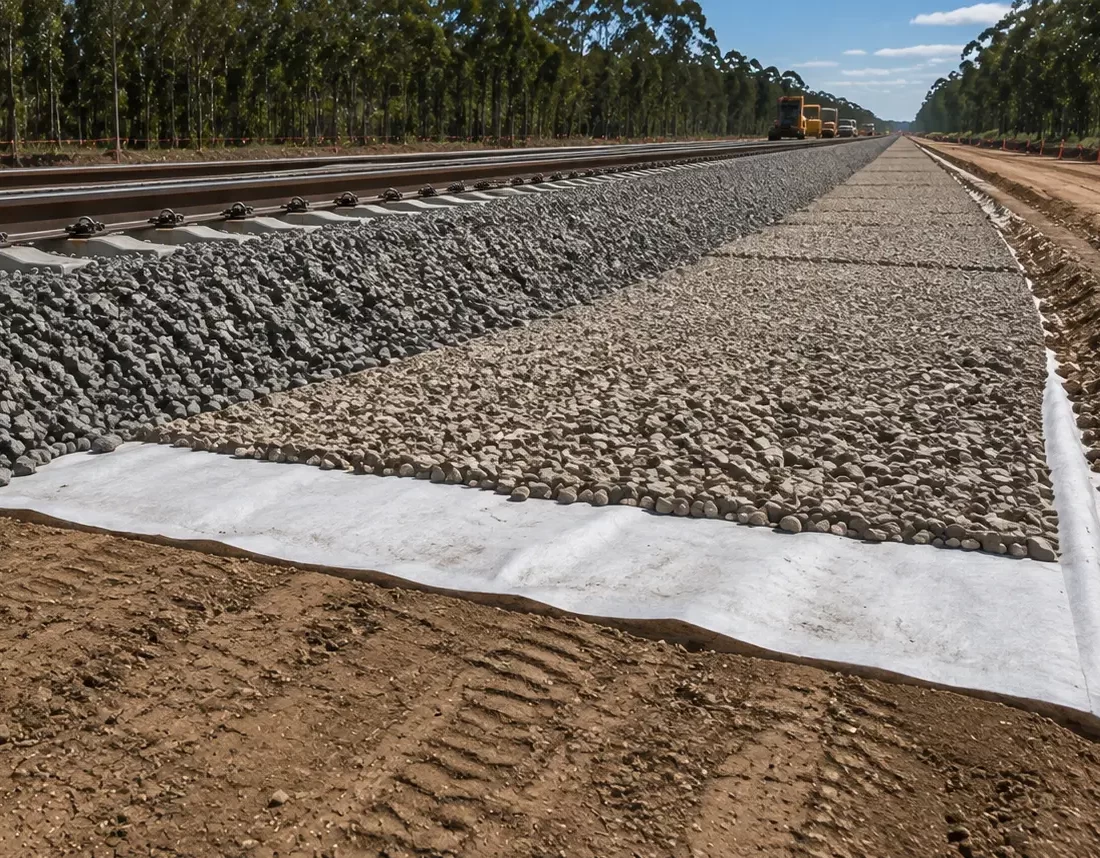
Geofabric is a high-strength permeable fabric installed between the railway formation and the overlying construction layers.
Rather than adding structural strength by itself, it performs several important engineering functions that help maintain the integrity of the complete track structure.
Its primary role is to keep different materials separated while allowing water to pass freely through the ground.
This simple concept delivers substantial long-term benefits for rail infrastructure owners.
Positioned between the formation and the capping layer, geofabric creates a separation barrier that helps preserve the performance of every layer above it.
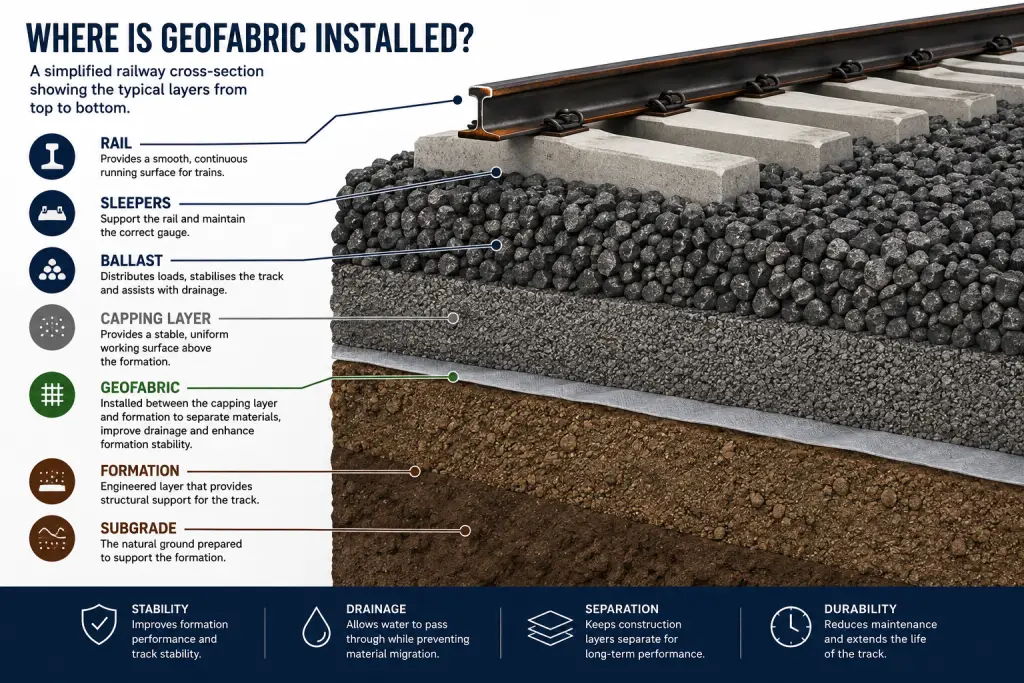
Why Separation Matters
One of the biggest causes of long-term track deterioration is the gradual mixing of different construction materials.
Without a separation layer:
- Fine materials migrate upward.
- Ballast becomes contaminated.
- Drainage performance decreases.
- The formation weakens.
- Maintenance becomes more frequent.
By preventing this intermixing, geofabric helps preserve the quality of both the ballast and the formation.
It is a relatively small component that delivers benefits throughout the life of the railway.
Five Ways Geofabric Improves Railway Performance
Rather than thinking of geofabric as another construction product, it’s more useful to consider the engineering outcomes it delivers.
- Separates Construction Layers
Prevents contamination between ballast, capping material and the underlying formation.
- Improves Drainage
Allows groundwater to move through the structure while preventing the movement of fine soils.
- Increases Formation Stability
Helps maintain consistent support beneath the ballast layer.
- Reduces Maintenance
Cleaner ballast and a more stable formation reduce ongoing maintenance interventions.
- Extends Asset Life
Protecting the underlying formation improves the long-term performance of the entire railway asset.
When Should Geofabric Be Used?
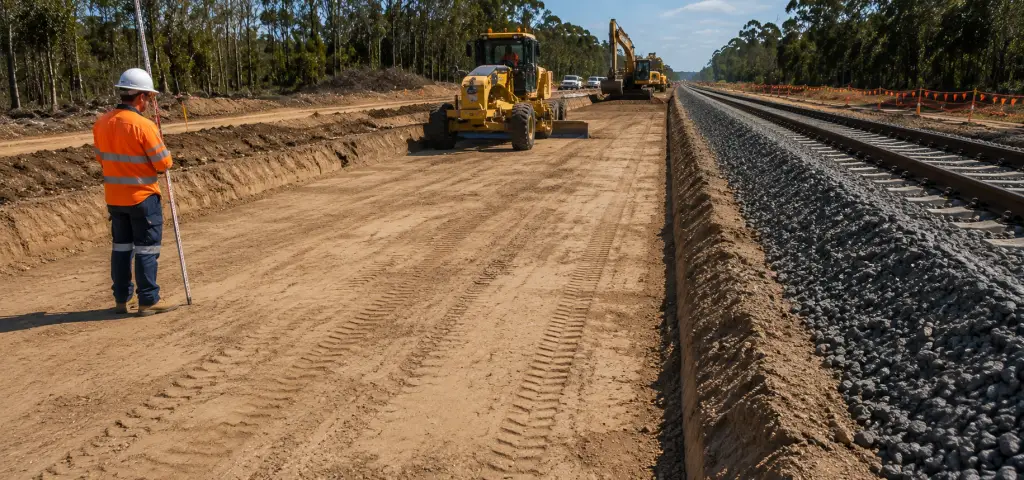
While every project is different, geofabric is commonly installed during:
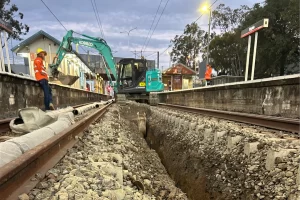
- Formation rehabilitation
- Track renewal programs
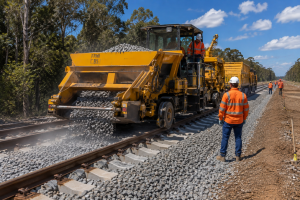
- Ballast replacement
- New railway construction
- Drainage improvement projects
- Soft ground remediation
- Flood damage repairs
- Rail corridor upgrades
Its inclusion is generally determined during project design after assessing ground conditions and asset requirements.
Supporting Better Drainage
Water remains one of the greatest threats to railway performance.
Even the strongest formation will deteriorate if moisture becomes trapped within the track structure.
When combined with effective drainage systems, geofabric helps maintain a free-draining track structure by:
- allowing water to move downward
- reducing contamination
- protecting ballast quality
- maintaining formation integrity
For this reason, geofabric is frequently installed alongside drainage upgrades and formation rehabilitation works.
Geofabric as Part of an Integrated Renewal Strategy
The most successful rail renewal programs rarely focus on a single component. Instead, they consider how every layer of the track structure works together. An integrated renewal program may include:
| Rail Element | Purpose |
|---|---|
| Formation rehabilitation | Restore the structural foundation |
| Geofabric installation | Separate and protect engineered layers |
| Capping layer | Improve load distribution |
| Ballast installation | Support track geometry and drainage |
| Rail & sleeper renewal | Restore operational performance |
| Drainage improvements | Manage water throughout the corridor |
This integrated approach improves reliability while reducing whole-of-life maintenance costs.
Matrix’s Approach
At Matrix Unlimited, we recognise that successful railway infrastructure starts well below the rails.
Our rail and civil construction teams understand the importance of properly prepared formations, effective drainage and the correct installation of geofabric as part of an integrated renewal strategy.
Whether supporting major track renewals, targeted rehabilitation programs or drainage upgrades, we focus on practical construction methods that improve long-term asset performance while delivering safe, efficient outcomes for our clients.
Conclusion
Although rarely visible once construction is complete, geofabric plays an important role in protecting railway infrastructure for decades to come.
By separating construction layers, improving drainage and preserving formation stability, it contributes directly to safer operations, lower maintenance costs and longer asset life.
When incorporated into well-planned rail renewal programs alongside formation rehabilitation, ballast installation and drainage improvements, geofabric helps create stronger, more resilient rail networks capable of meeting the demands of modern rail operations.
Need Specialist Rail & Civil Infrastructure Support?
Whether you’re planning a major renewal program, drainage upgrade or formation rehabilitation project, Matrix Unlimited provides experienced rail and civil construction teams across Australia.
Our expertise spans formation rehabilitation, geofabric installation, ballast works, rail construction, drainage and specialist labour, helping infrastructure owners deliver safer, longer-lasting railway assets.
Contact Matrix Unlimited to discuss your next rail infrastructure project.