When people think about railway infrastructure, they naturally focus on the visible components – the rail, sleepers and ballast. However, one of the most important elements of any rail network lies beneath the surface. The railway formation.
While largely hidden from view, the formation provides the structural foundation that supports every train movement. When this foundation begins to deteriorate, no amount of rail replacement or routine maintenance can fully restore long-term performance.
This is why formation rehabilitation has become an increasingly important component of modern rail infrastructure renewal programs.
For infrastructure owners and project managers, investing in the formation is often one of the most effective ways to improve network reliability while reducing future maintenance requirements.
Understanding Railway Formation
The railway formation is the engineered platform upon which the track structure is built.
It sits beneath the ballast and sleepers and is responsible for distributing train
loads safely into the underlying ground.
A typical track structure consists of:
- Rail
- Sleepers
- Ballast
- Capping layer
- Formation
- Subgrade
Each layer plays a critical role, but the formation is ultimately responsible for providing a stable, well-drained and durable base for the entire track system.
If this layer loses its integrity, the performance of every component above it is affected.
Why Formation Deteriorates
Railway formations are subjected to enormous stresses throughout their service life.
Repeated axle loads, weather events and changing ground conditions gradually reduce the formation’s ability to support the track structure.
Common causes of deterioration include:
- Water ingress
- Poor drainage
- Ballast contamination
- Pumping and mud holes
- Weak or reactive subgrades
- Long-term settlement
- Heavy freight loading
- Historical construction methods
- Vegetation intrusion
- Inadequate drainage maintenance
These issues often develop gradually, making early intervention an important part of effective asset management.
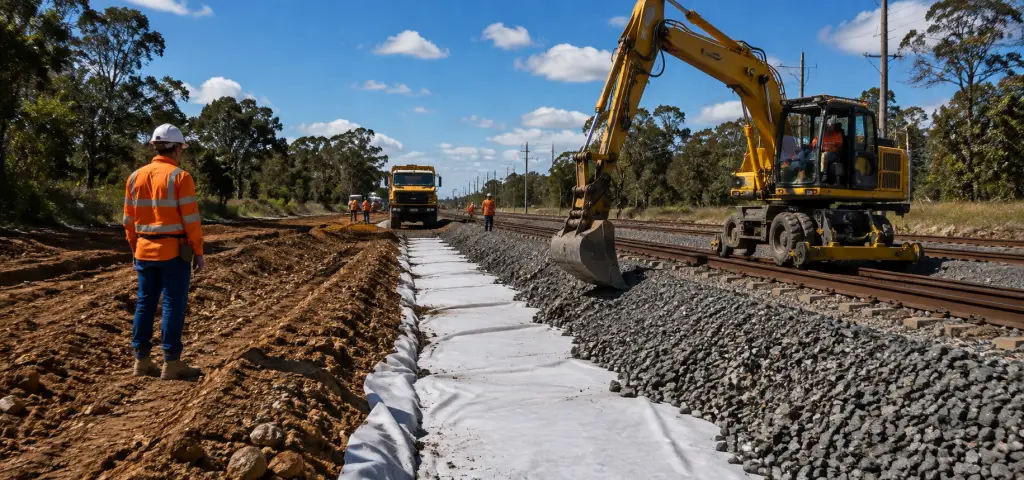
"Successful track renewal starts below the sleepers. Long-term performance depends on the integrity of the formation supporting the entire track structure." — Matrix Unlimited
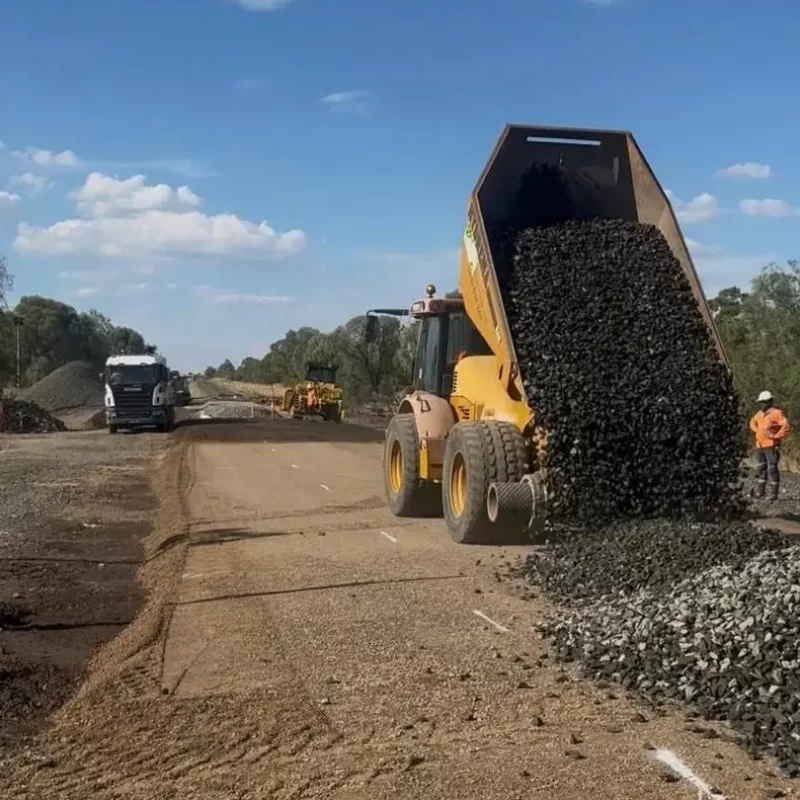
The Hidden Cost of Ignoring the Formation
Many recurring track defects originate below the ballast rather than within the rail itself.
Symptoms commonly include:
- Repeated geometry defects
- Poor ride quality
- Increased tamping frequency
- Ballast fouling
- Track settlement
- Speed restrictions
- Higher maintenance costs
- Reduced asset life
Without addressing the underlying formation, maintenance activities may temporarily improve track condition but often fail to resolve the root cause.
Formation rehabilitation aims to break this cycle.
What Does Formation Rehabilitation Involve?
Every project is different, but rehabilitation generally focuses on restoring the structural integrity of the track foundation.
Depending on site conditions, works may include:
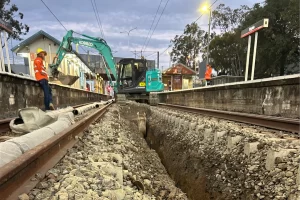
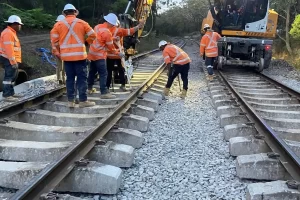
- Excavation of unsuitable material
- Removal of contaminated ballast
- Subgrade stabilisation
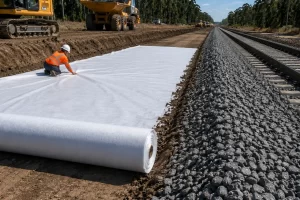
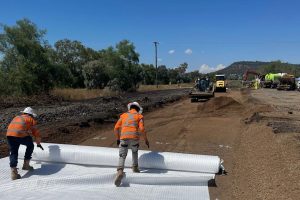
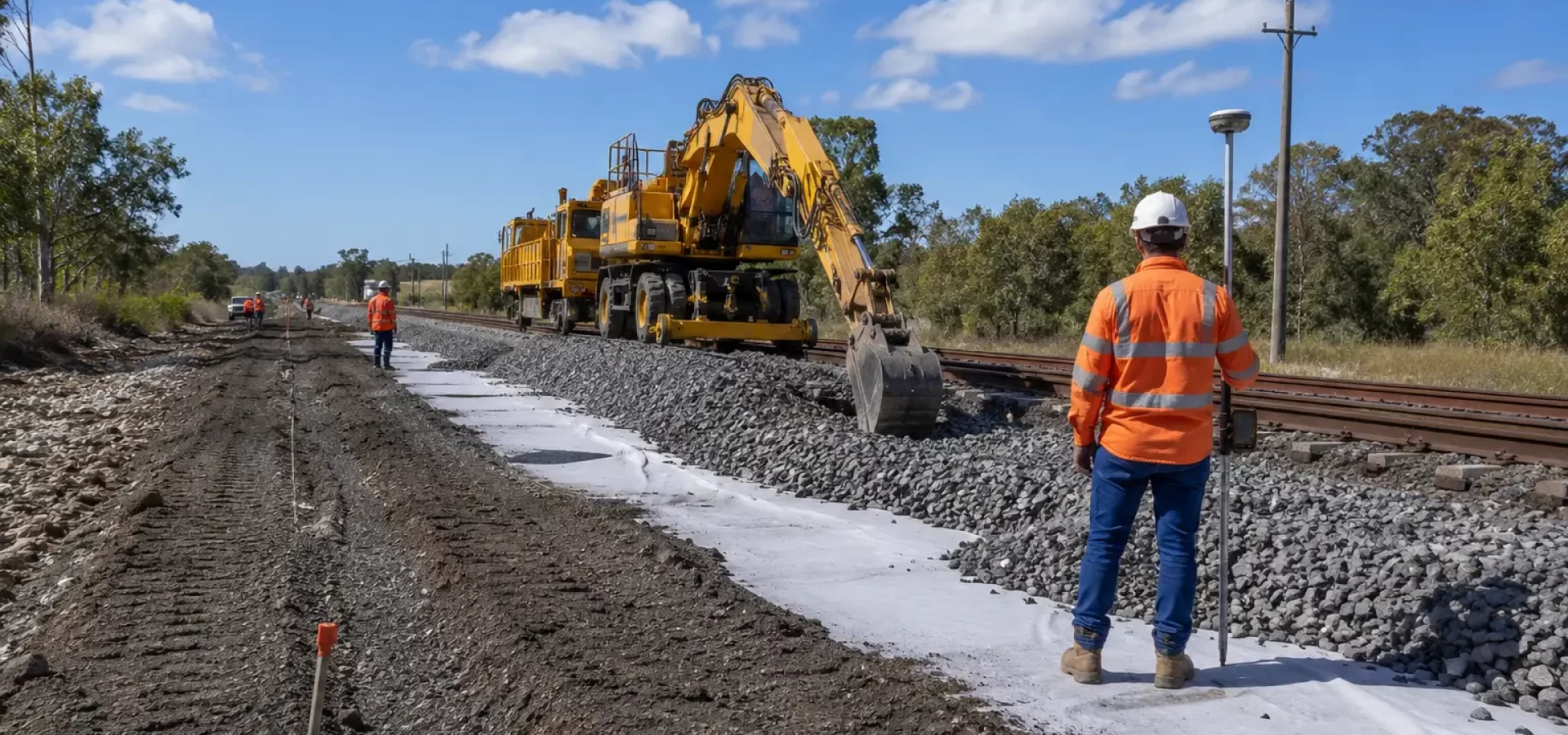
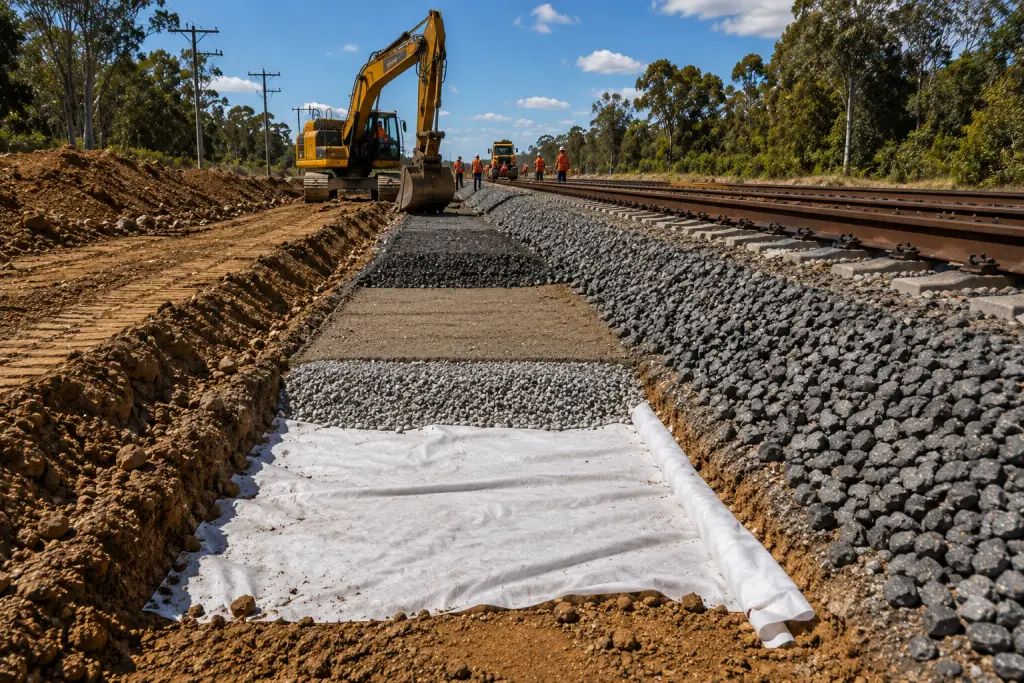
- Installation of geofabric separation layers
- Construction of new capping layers
- Drainage improvements
- Compaction and testing
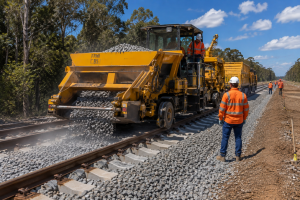
- Ballast replacement
- Track reconstruction
Rather than simply replacing components, rehabilitation addresses the conditions contributing to long-term deterioration.
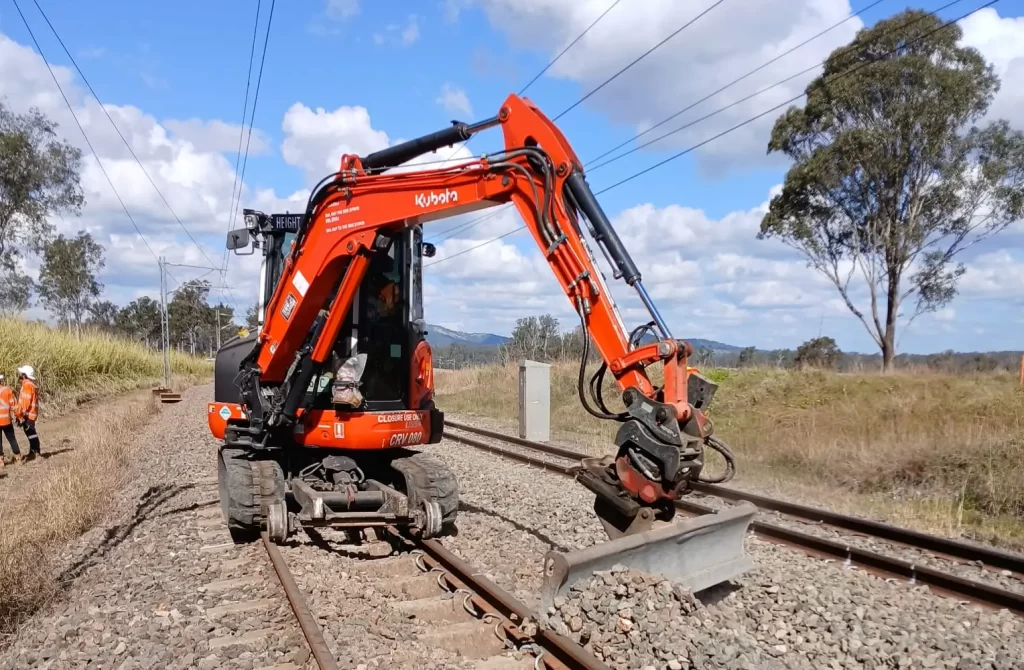
Why Drainage Is Fundamental
One of the most significant contributors to formation failure is water.
When water becomes trapped within the track structure it can weaken the formation, contaminate ballast and accelerate deterioration throughout the asset.
For this reason, successful rehabilitation often includes:
- New drainage systems
- Culvert upgrades
- Shoulder drains
- Cross drainage improvements
- Improved water management
Effective drainage helps preserve the integrity of the formation while reducing future maintenance interventions.
The Value of Geofabric and Capping Layers
Modern formation rehabilitation frequently incorporates geofabric and engineered capping materials.
These layers help:
- Separate ballast from fine subgrade materials
- Improve load distribution
- Reduce contamination
- Increase stability
- Improve drainage performance
- Extend track life
While these components are rarely visible once construction is complete, they play an important role in improving long-term asset performance.
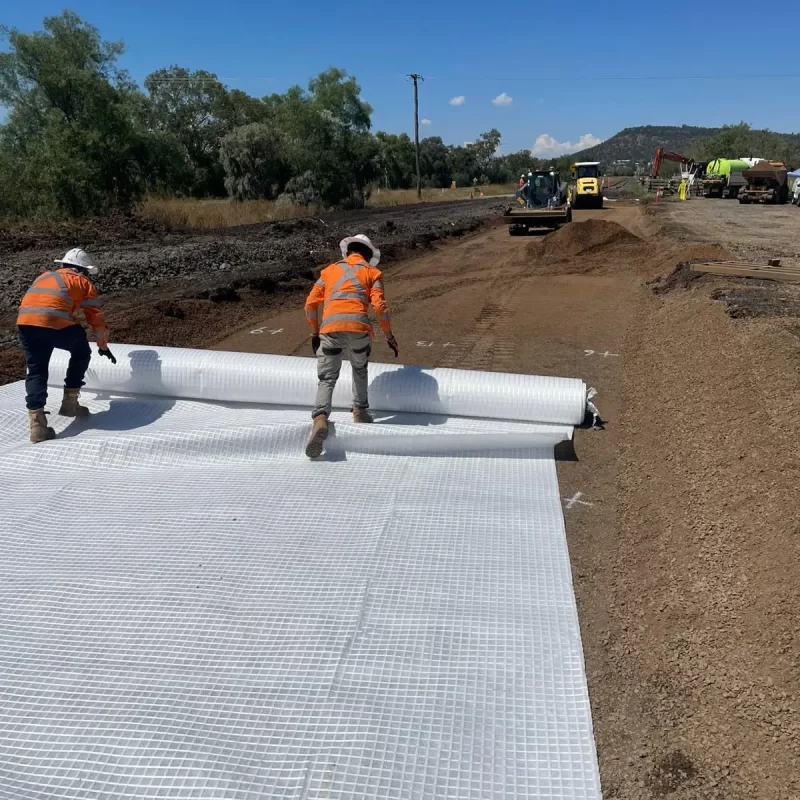
Formation Rehabilitation Supports Successful Track Renewal
Formation rehabilitation is often undertaken alongside major track renewal projects.
Replacing rail and sleepers without improving the supporting formation may deliver only limited long-term benefits.
By rehabilitating the formation at the same time as track renewal, infrastructure owners can maximise the return on their investment and reduce the likelihood of recurring defects.
This integrated approach is becoming increasingly common across Australia’s rail networks as asset managers focus on whole-of-life performance rather than short-term repairs.
Key Benefits
- Longer asset life
- Reduced maintenance
- Improved drainage
- Better ride quality
- Greater reliability
Planning and Collaboration Deliver Better Outcomes
Formation rehabilitation requires careful planning and coordination across multiple disciplines.
Successful delivery depends on the integration of:
- Rail construction
- Civil earthworks
- Drainage
- Plant operations
- Survey
- Quality assurance
- Environmental management
- Safety planning
Projects that combine these capabilities under a coordinated delivery approach often achieve greater efficiency while reducing interface risks.
Matrix’s Approach to Formation Rehabilitation
At Matrix Unlimited, we understand that lasting rail performance starts below the track.
Our teams work across rail and civil disciplines to deliver practical formation rehabilitation solutions that improve long-term asset reliability rather than simply addressing surface defects.
Whether supporting track renewals, shutdown works or targeted maintenance programs, we combine experienced personnel, specialist plant and disciplined project delivery to help clients restore the integrity of the complete track structure.
By considering formation, drainage, ballast and civil infrastructure together, we help deliver infrastructure solutions designed for long-term performance.
Conclusion
Formation rehabilitation is one of the most important—but often least visible—investments in railway infrastructure.
A strong formation supports safer operations, improves ride quality, reduces maintenance requirements and extends the life of the entire track structure.
When combined with quality drainage, sound engineering and experienced project delivery, formation rehabilitation provides a solid foundation for reliable rail networks capable of meeting future operational demands.
Need Specialist Rail & Civil Infrastructure Support?
Matrix Unlimited delivers integrated rail construction, formation rehabilitation, drainage, civil construction, specialist labour and plant solutions across Australia.
If you’re planning a renewal program or looking to improve the long-term performance of your rail assets, our experienced team is ready to support your next project.
Contact Matrix Unlimited to discuss how we can assist.