Railway infrastructure is designed to carry significant loads over long periods. However, one of the greatest threats to track performance does not come from the trains above the track. It comes from water below and around it.
Effective rail drainage helps protect ballast, formation and subgrade from excessive moisture. In turn, this supports track stability and long-term railway performance.
When drainage systems cannot move water away from the rail corridor effectively, deterioration can accelerate. What begins as a drainage problem can eventually contribute to formation failure, track geometry defects and increased maintenance requirements.
For this reason, drainage should be considered an integral part of railway infrastructure rather than simply a supporting civil work.
Why Is Rail Drainage So Important?
A railway track structure relies on several layers working together.
Rails transfer loads through the sleepers and into the ballast. Below the ballast, the formation and subgrade provide the foundation that supports the entire track structure.
Water can compromise the performance of these materials.
Effective rail drainage manages surface water and groundwater before they adversely affect the track structure. It also helps prevent water from remaining within the ballast and formation for extended periods.
Without effective drainage, repeated train loading can accelerate deterioration in saturated or weakened materials.
What Happens When Water Enters the Track Formation?
A railway formation needs sufficient strength and stability to support repeated train movements.
When excessive water enters the formation or subgrade, some materials can lose strength. Continued loading may then cause deformation, pumping or localised settlement.
Over time, these conditions can affect the track above.
The result may include:
- Uneven track settlement
- Poor track geometry
- Ballast contamination
- Formation deterioration
- Mud pumping
- Reduced track stability
- More frequent maintenance
- Localised drainage failures
Importantly, repairing the visible track defect may not address the underlying problem.
If poor drainage caused or contributed to the deterioration, the problem may return unless crews also address the source and movement of water.
The Relationship Between Drainage and Ballast
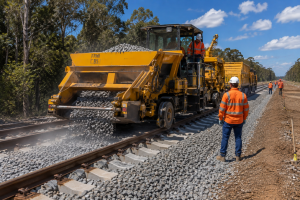
Ballast performs several important functions within the railway track structure. It supports sleepers, distributes loads and helps maintain track alignment.
It also needs to drain effectively.
Clean, appropriately graded ballast allows water to move through the track structure rather than remaining trapped around the sleepers.
However, fine material can gradually contaminate ballast. Formation material may also migrate upward under certain conditions. As contamination increases, the ballast can become less effective at draining water.
This creates a cycle:
Poor drainage → retained water → weakened formation → contamination and movement → reduced drainage → further deterioration.
Breaking that cycle often requires more than simply adding new ballast.
Common Rail Drainage Solutions
The most appropriate drainage solution depends on the site, surrounding terrain, existing infrastructure, soil conditions and volume of water entering the corridor.
Table Drains and Open Drains
Open drains can collect surface runoff and direct it away from the track structure. Keeping these drainage paths clear is important because vegetation, sediment and debris can restrict water flow.
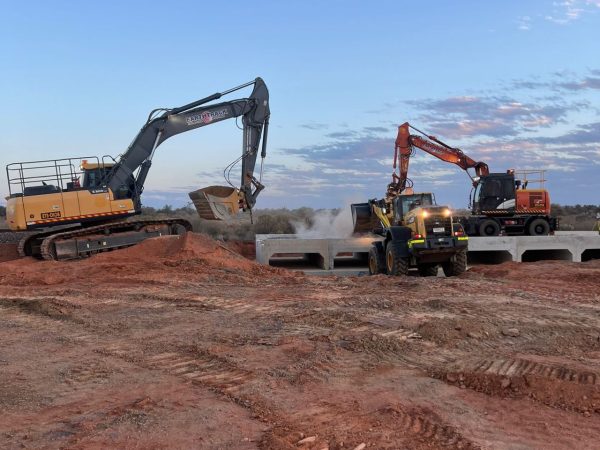
Culverts
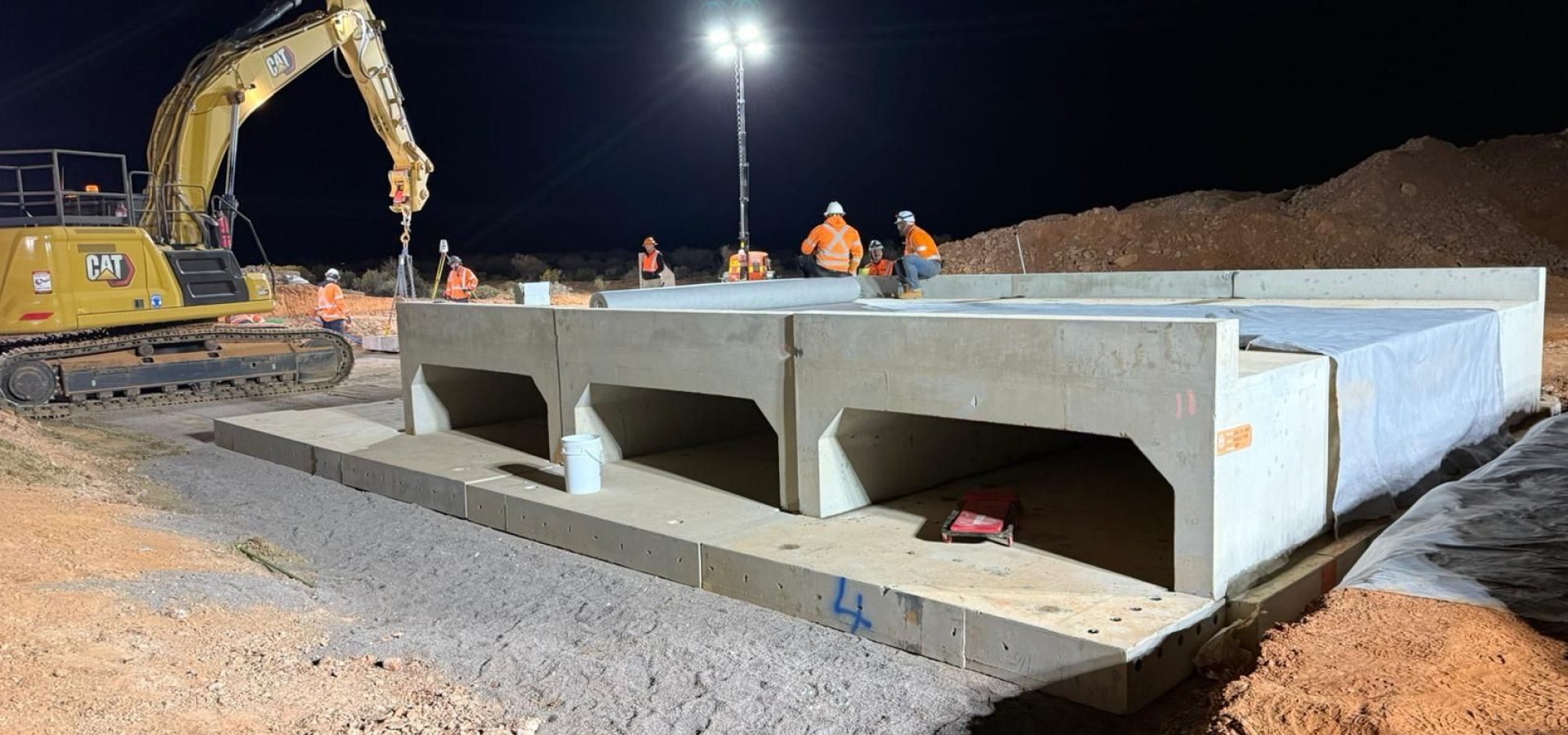
Culverts allow water to pass beneath the railway corridor. They are particularly important where natural drainage paths cross the railway. The culvert must have suitable capacity and remain clear enough to move water effectively.
Subsoil Drainage
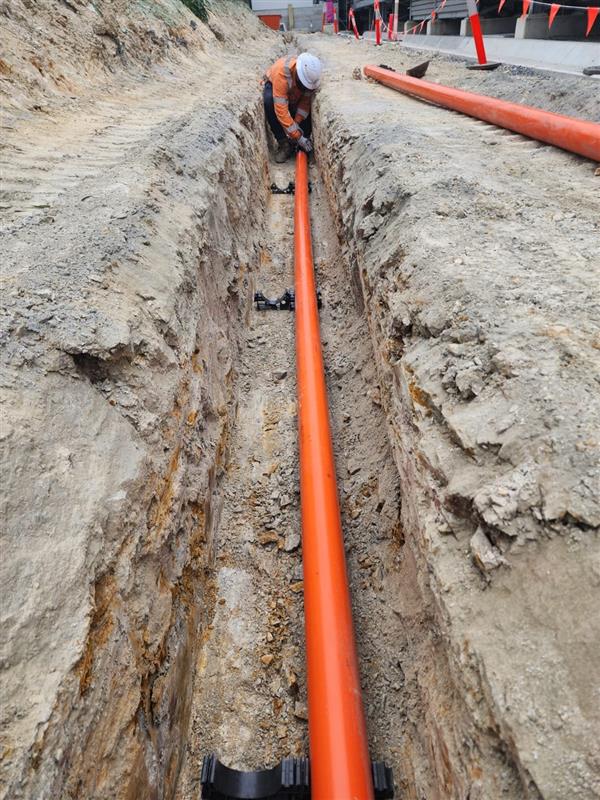
Some locations require drainage below ground level. Subsoil drainage can intercept groundwater or remove moisture from areas where water would otherwise accumulate around the formation.
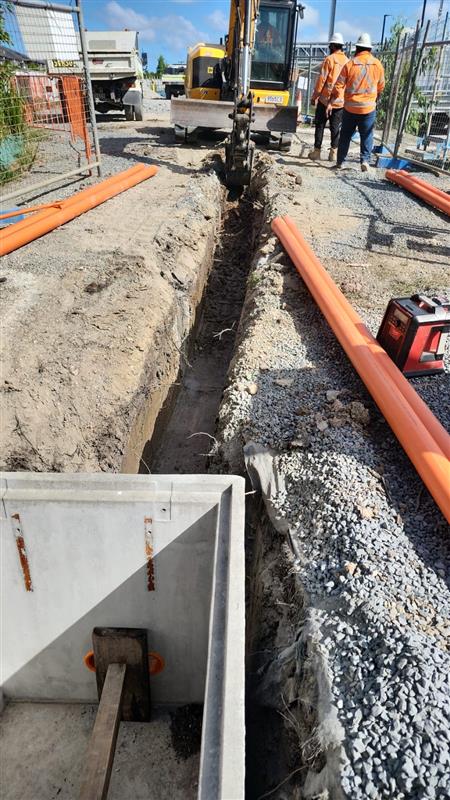
Pit and Pipe Drainage
Pits and underground pipes can collect and transfer water through constrained rail environments where open drainage is unsuitable. This approach may form part of wider civil and drainage works associated with stations, yards or developed corridors.
Formation Drainage
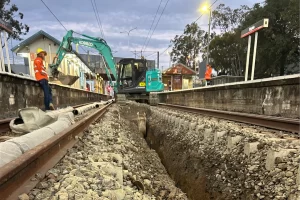
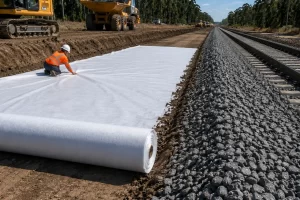
During formation rehabilitation, crews may reshape the formation, improve drainage paths or install suitable materials to help move water away from the track structure. Geofabric and capping materials may also form part of the engineered solution where specified.
Drainage Should Be Considered During Track Renewal
Track renewal provides an important opportunity to investigate what is happening beneath the visible railway infrastructure.
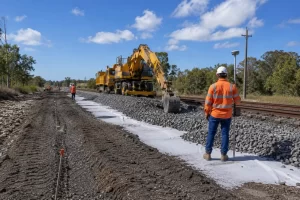
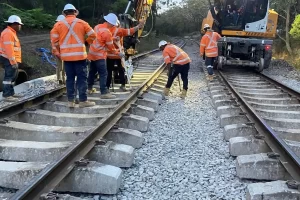
Removing rail, sleepers and ballast may expose previously hidden formation defects or evidence of poor drainage.
Instead of rebuilding the track over an existing problem, project teams can assess whether drainage or formation improvements should form part of the renewal scope.
For example, works may include drain cleaning, excavation, culvert improvements, subsoil drainage, geofabric installation, capping or broader formation rehabilitation.
Addressing these issues during renewal can improve the performance of the reconstructed track and reduce the likelihood of recurring defects.
Drainage and Formation Rehabilitation Work Together
Where water has already contributed to significant formation deterioration, drainage improvements alone may not restore the required foundation.
Crews may need to remove unsuitable or contaminated material before rebuilding the formation with specified materials.
At the same time, they can improve drainage so the reconstructed formation has greater protection from future water ingress.
This combination is important.
Formation rehabilitation repairs the affected foundation, while effective drainage helps protect it from recurring water-related deterioration.
For infrastructure owners, addressing both issues can provide a more durable outcome than repeatedly treating surface-level track defects.
Good Drainage Can Reduce Maintenance Pressure
Railway maintenance cannot eliminate every effect of weather, groundwater or heavy rainfall.
However, effective drainage can reduce unnecessary stress on the track structure.
By moving water away efficiently, good drainage helps maintain the condition of ballast and formation. Consequently, the track has a more stable foundation from which to perform.
This can help reduce recurring maintenance associated with water-related deterioration and support longer-term asset reliability.
It also allows maintenance teams to focus resources on planned infrastructure works rather than repeatedly responding to the same underlying problem.
Drainage Requires Ongoing Attention
Installing drainage infrastructure is only part of the solution.
Drainage systems also need inspection and maintenance.
Sediment can accumulate. Vegetation can obstruct open drains. Culverts can become partially blocked, while erosion can alter established drainage paths.
Heavy rainfall and flooding can also expose weaknesses that may not be evident during normal weather conditions.
Therefore, inspecting drainage as part of broader track and corridor maintenance can help identify emerging problems before they significantly affect the railway.
Rail and Civil Works Need to Work Together
Railway drainage highlights the close relationship between rail and civil infrastructure.
A track defect may appear to be a rail maintenance issue, yet the underlying cause can originate within the formation, drainage system or surrounding civil infrastructure.
For this reason, integrated delivery can be valuable.
Rail crews understand the requirements of the track structure, while civil capability allows drainage, excavation, formation and associated infrastructure works to be completed as part of the broader solution.
This approach is particularly useful during track renewals, shutdowns and rail possessions where several interdependent activities need to occur within a limited access window.
Supporting Rail Drainage and Civil Infrastructure Works
Matrix Unlimited supports rail infrastructure projects with civil construction, drainage, excavation, formation rehabilitation, plant and experienced rail personnel.
Our capabilities include drainage and formation works that support track construction, maintenance and renewal programs.
By considering both the railway infrastructure and the foundation supporting it, project teams can address the causes of deterioration rather than simply repairing the symptoms.
Need Support With Rail Drainage Works?
Effective drainage is fundamental to stable and reliable railway infrastructure.
Whether a project involves drainage improvements, culverts, pit and pipe, excavation, formation rehabilitation or associated track works, Matrix Unlimited can provide rail and civil capability to support project delivery. Talk to Our Team.